A creamy, flavorful butternut squash soup that’s easy to make. This is a recipe that I made when I was macrobiotic. It can be vegan or you can add a splash of cream at the end.
INGREDIENTS
2½ pounds pre-cut butternut squash (7 to 8 cups, cubed; see note)
2 Tablespoons olive oil
1 medium yellow onion, roughly chopped
3-4 cups vegetable stock or water
¾ cup heavy cream, plus more for serving (optional)
Salt (optional)
handfull of fresh dill or 1 teaspoon chopped fresh thyme or 1 teaspoon curry powder, for a different flavor profile. Don’t use cream with dill.
INSTRUCTIONS
First, chop the veggies! Sauté the onion until it becomes translucent, add the squash, and cook until it begins to soften. Pour in the broth and simmer until the squash becomes tender, about 20 minutes
Let cool slightly and pour the soup into a blender, working in batches if necessary, and blend until smooth. If using dill, blend with soup. (An immersion blender is very helpful here.) If your soup is too thick, add up to 1 cup more broth. If desire, add thyme or curry powder after blending. Season to taste and serve with parsley, pepitas (shelled pumpkin seeds), and crusty bread.
Note: For the best flavor and texture, use fresh butternut squash in this recipe. Frozen squash can release extra water when cooked, which may dilute the soup.
My daughter made this soup and used half butter and half olive oil and chicken stock instead of water or vegetable stock. Then she mixed in a generous portion of fresh cream after the soup was blended. Salt and pepper to taste.
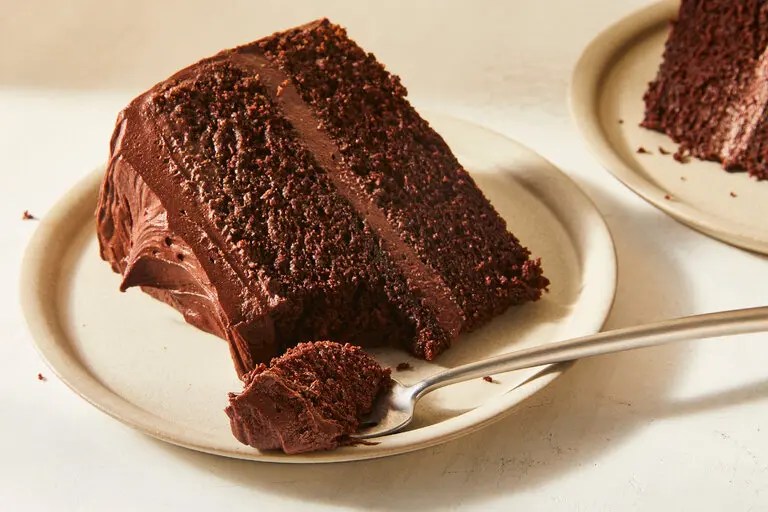
This classic chocolate layer cake is “deeply chocolatey, fluffy and even tastier if you make it the day before you plan to eat the cake. The layers bake up nice and flat, so you don’t have to bother with trimming. The sour cream makes the cake layers nice and plush, and adds a bit of tanginess to the American-style buttercream made with confectioners’ sugar, a hefty dose of cocoa powder, vanilla and plenty of salt to balance the flavor. Cover the cake with swoops and swirls of buttercream”, and top with sprinkles if desired.
I made this cake in a rectangular 9×13 pyrex baking dish and halved the frosting ingredients. Use your search engine for the math, if necessary. It came out great! Don’t use the parchment paper here. Not necessary.
One reader’s comment: The cake keeps in the fridge for a long time and keeps improving. It also freezes very well as individual slices wrapped in plastic wrap and foil.
INGREDIENTS
Yield: 12 to 16 servings
¾ cup/180 milliliters neutral oil (like canola or grapeseed), plus more for greasing the pans. (Didn’t have the right oil so used melted, unsalted butter.)
2¼ cups/450 grams granulated sugar
2 cups/256 grams all-purpose flour
1¼ cups/110 grams cocoa powder, sifted if lumpy
1½ teaspoons baking powder
1½ teaspoons baking soda
1½ teaspoons kosher salt (such as Diamond Crystal)
1 cup/240 grams sour cream
3 large eggs
1 tablespoon pure vanilla extract
1 cup/240 milliliters prepared hot coffee
1½ cups/340 grams unsalted butter, softened to room temperature
3¾ cups/450 grams confectioners’ sugar, sifted if lumpy
1½ cups/140 grams cocoa powder, sifted if lumpy
¼ cup/60 grams sour cream
¼ cup/60 milliliters lukewarm milk, plus more as needed
1 tablespoon vanilla extract
¾ teaspoon kosher salt (such as Diamond crystal)
Sprinkles (optional), for decorating
PREPARATION
Make the cake: Set a rack in the center of the oven and heat oven to 350 degrees. Generously grease two 9-inch baking pans and line the bottoms with parchment paper.
In a large bowl, combine the granulated sugar, flour, cocoa powder, baking powder, baking soda and salt. Whisk until well combined and no lumps remain.
In a medium bowl, whisk the oil with the sour cream, eggs and vanilla.
Add the sour cream mixture to the dry ingredients. Using an electric mixer, mix on low until the dry ingredients are moistened, then turn the mixer to medium-high and mix for 2 minutes, scraping the bottom and sides of the bowl halfway through. Carefully fold the coffee into the batter using a flexible spatula.
Divide the batter evenly into the prepared pans and tap them on the counter a few times to release any large air bubbles. Bake until puffed and a toothpick inserted into the center comes out clean, 35 to 40 minutes. Set the pans on a wire rack and let the cakes cool for about 20 minutes. Next, run a thin knife around the edges of the pan and carefully turn the cakes out onto the rack to cool completely. (You may have to tap the pans gently on the rack to release each cake.)
While the cakes bake, clean the mixing bowl and make the buttercream: Add the butter to the bowl and mix on medium-high until smooth, stopping the mixer occasionally to scrape the bottom and sides of the bowl. Add the confectioners’ sugar, cocoa powder, sour cream, milk, vanilla extract and salt. Mix on low until the sugar and cocoa are moistened, then turn the speed up to medium-high and whip until smooth and fluffy, about 5 minutes, adding a bit more milk (1 teaspoon at a time) if necessary to make a smooth and light buttercream. Scrape the bowl occasionally to ensure that the buttercream is evenly mixed. Taste and add a bit more salt if desired. (The buttercream can be kept at room temperature while the cake finishes baking and cooling.)
Assemble the cake: Just before frosting the cake, stir the buttercream vigorously with a flexible spatula to knock out any large air bubbles. (This will help to make the final buttercream smooth.) Add a small spoonful of buttercream to a serving plate or cardboard cake round and place one layer of cake on top, puffed-side down. Spread about 1 heaping cup of buttercream evenly over the top of the cake. Place the second layer on top of the buttercream, puffed-side down, and press gently. Spread a thin layer of buttercream over the top and sides of the cake (be careful not to transfer crumbs back into the bowl of frosting), then refrigerate the cake until the buttercream is firm, about 30 minutes.
Spread the remaining buttercream over the top and sides of the cake and top with sprinkles, if using.
Store the cake at room temperature for up to 4 days. Use a hot, clean and dry knife for the tidiest slice
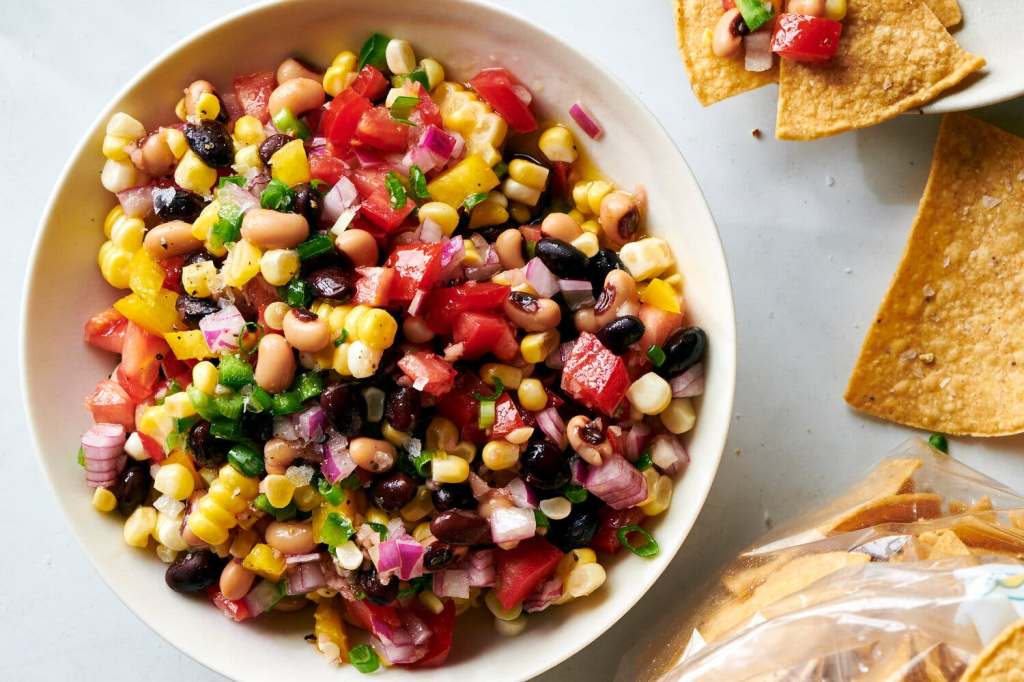
I made this the other night for a family barbecue. It was a wonderful accompaniment to our hamburgers and hot dogs. The canned beans may be a little soft for some, but if you want a firmer bean in the dish, try chick peas. Author suggests eating this with a pile of tortilla chips. 🙂
INGREDIENTS
Yield:8 cups
⅓ cup olive oil
¼ cup red wine vinegar
3 to 4 garlic cloves, minced
1 teaspoon granulated sugar
Kosher salt and black pepper
3 plum tomatoes, cored, seeded if desired, and diced
½ red onion, finely diced (about ¾ cup)
1(15-ounce) can black beans, rinsed
1(15-ounce) can black-eyed peas, rinsed
1½ cups fresh corn kernels (from about 2 to 4 cobs) or thawed, drained frozen sweet corn (about 8 ounces)
1 red, green or yellow bell pepper, seeded and finely diced
1 jalapeño, seeded and finely diced
½ cup chopped cilantro leaves and tender stems, plus more for garnish, if desired
1 scallion, white and green parts, chopped, for garnish (optional)
Tortilla chips, for serving
PREPARATION
Make the dressing: In a medium bowl, whisk the olive oil, vinegar, garlic, sugar, ½ teaspoon salt and ½ teaspoon pepper to combine.
Add the tomatoes, red onion, black beans, black-eyed peas, corn, bell pepper, jalapeño and cilantro. Toss to combine and season with salt and pepper to taste. Cover with plastic wrap and refrigerate for 2 hours before serving.
To serve, toss well and season to taste. Sprinkle with scallions and serve with tortilla chips.
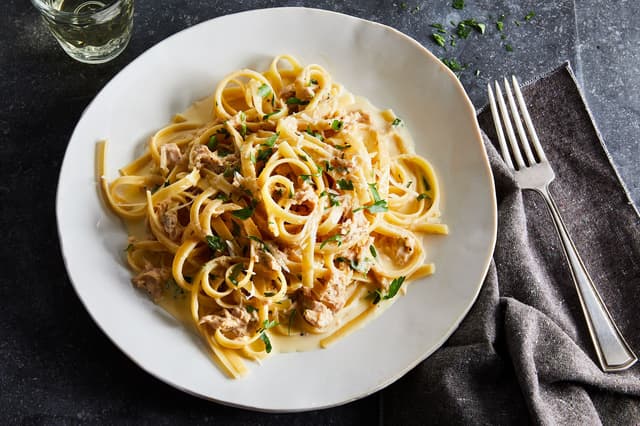
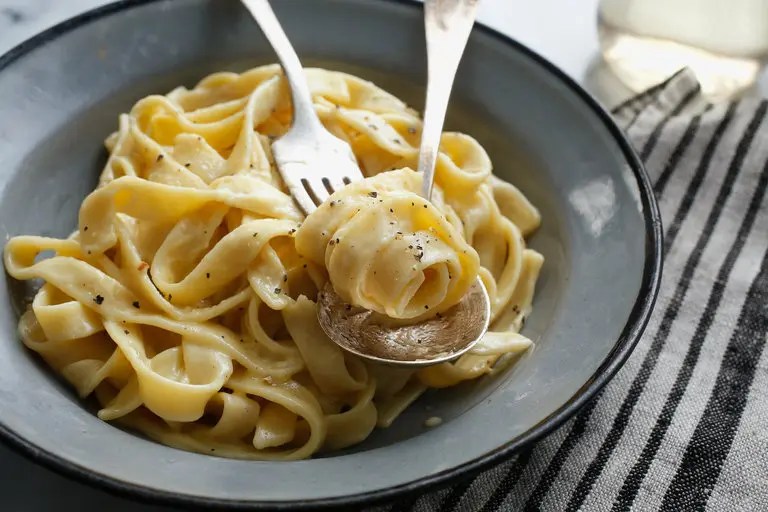
Jack O. was a fan of this recipe from the famed upper east side restaurant, Elaines, in NYC. It was a celebrity hot spot from the early 60’s to 2011, closing only after its proprietress, Elaine Kaufman, died. It’s a glorified mac and cheese, however, there are several additions which can change up the recipe.
INGREDIENTS
Yield: 6 servings
Salt
2 tablespoons butter
1 small clove garlic, finely chopped
1½ cups heavy cream
1 large egg yolk
1 pound fresh fettuccine
1 cup freshly grated Parmigiano-Reggiano
Freshly ground pepper to taste
PREPARATION
Bring 6 quarts generously salted water to a boil.
While the water heats, melt the butter in a large, deep skillet over medium-high heat. Add garlic; sauté until fragrant and sizzling, about 2 minutes. Whisk the cream with the egg yolk in a bowl until blended; pour into the garlic butter. Reduce heat to medium-low; stir until hot but not boiling. Keep warm over low heat.
Meanwhile, cook the pasta, partially covered, until al dente. (The pasta will float when it’s done.) Drain in a colander, shaking out excess water, but reserve a little cooking water. Pour hot pasta into the cream mixture and toss to coat (still over low heat). Add the cheese and keep tossing gently until cream is mostly absorbed. Season with salt and pepper. If sauce is absorbed too much, toss with a little pasta water. Serve in warm bowls.
James Beard Pleasant Pasta, recipe by Marion Cunningham
INGREDIENTS
Yield: 4 servings
Salt
1 pound of spaghetti
1 10-ounce package frozen peas
4 tablespoons butter
½ pound thinly sliced prosciutto di Parma, rolled up and cut in ¼-inch-wide strips (or ham)
⅔ cup heavy cream
Freshly ground black pepper
½ to ¾ cup grated Parmesan cheese; more as needed
PREPARATION
Bring a large pot of lightly salted water to a boil. Add pasta, and cook until just tender. While pasta cooks, combine peas and 1 cup water in a small saucepan. Bring to a boil, and stir until peas are thoroughly heated. Drain and set aside. (Or add peas to almost finished pasta. Drain together.)
Drain pasta, return to pot and toss with butter. Add peas, prosciutto and cream. Toss to mix well and to separate prosciutto strips. Season with salt and pepper to taste. Add Parmesan to taste, and toss again. Serve piping hot, passing more Parmesan separately at the table.
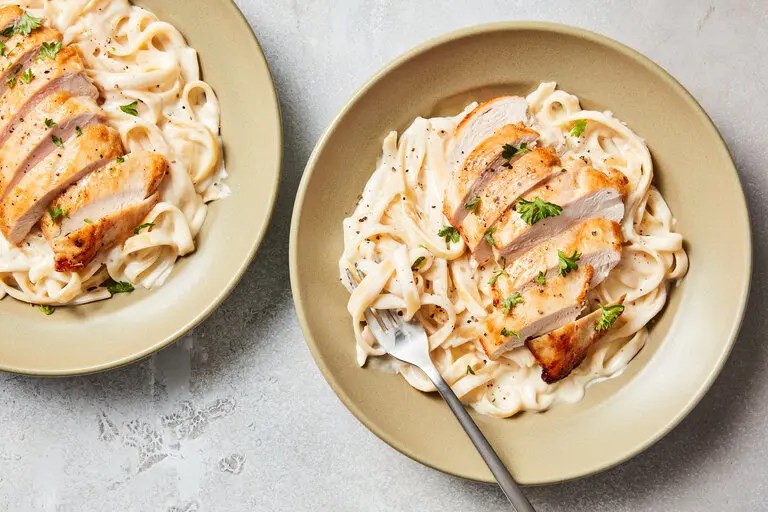
Chicken Alfredo by Naz Deravian
2 large boneless skinless chicken breasts (1 pound total), patted dry. Season both sides of the chicken breasts well with salt. In a pan, place 2 tablespoons of olive oil over medium-high heat. Once hot, reduce heat to medium and add the chicken; cook for 5 minutes.
Add 1 tablespoon of butter, swirl it around the pan and continue cooking until the chicken is golden brown, about 3 minutes more. Flip the chicken, add another tablespoon of butter, swirl it around and cook the other side until golden brown, 5 to 8 minutes.
Transfer the chicken to a cutting board and rest for 3 minutes. Slice the chicken in ½-inch-thick diagonals and loosely tent with aluminum foil.
Top spaghetti with the sliced chicken and serve immediately topped with parsley, if desired.
I have been looking for a stew recipe with chicken for a long time and am delighted to share this one with you. Boneless chicken thighs are used instead of breasts, as they stay juicier longer. Simmering them in the stew along with sweet paprika, chicken stock and a touch of apple cider vinegar adds surprising depth of flavor alongside dried herbs and plenty of vegetables for dimension and texture. Heavy cream is in the mix as well, wrapping everything in a silky blanket. This stew is as versatile as it is easy to make, so feel free to add in other vegetables like mushrooms or peppers and replace the heavy cream with coconut milk, or leave the cream out altogether.
I have made this recipe twice, the second time with bone in, skin on chicken beasts. Both were equally delicious. I didn’t add the herbs – just the salt and pepper.
INGREDIENTS
Yield:4 servings
2 tablespoons butter
2 tablespoons olive oil
1 medium onion, diced (about 6 ounces)
2 medium carrots, peeled and diced (about 5 ounces)
3 stalks celery, diced (about 3 ounces)
4 garlic cloves, minced
½ teaspoon sweet paprika
Salt and black pepper
3 tablespoons all-purpose flour
4 cups chicken broth
1 tablespoon apple cider vinegar
1½ pounds boneless, skinless chicken thighs ( 3 to 4 depending on size)
1 pound baby potatoes, cut into quarters (Use regular potatoes. The task of peeling the small ones was tedious.)
1 cup (1-inch pieces) green beans (about 4 ounces)
½ cup heavy cream
½ teaspoon dried sage
½ teaspoon dried thyme
½ teaspoon dried oregano
Fresh parsley, for serving
Lemon wedges, for serving
PREPARATION
Heat a large pot or Dutch oven on medium. Add butter, olive oil, onion, carrots, celery, garlic, paprika and a big pinch of salt and cook, stirring frequently, until onion is translucent, 5 to 7 minutes.
Add flour and stir for 1 minute. Add chicken broth and vinegar and stir until flour is incorporated.
Add chicken thighs, potatoes, green beans, heavy cream, sage, thyme, oregano, and 1 teaspoon each of salt and black pepper. Bring the stew to a gentle boil on medium-high and then reduce heat to maintain a simmer. Simmer, with the lid partially covering the pot, until the chicken is cooked through, about 20 minutes.
Transfer the chicken to a plate. Completely cover the pot with the lid and let the vegetables cook for 5 to 10 minutes, until desired doneness. Meanwhile, shred the chicken into bite-size pieces with two forks, then return the chicken to the pot. Season to taste with more salt and pepper. Serve warm, garnished with parsley, with lemon wedges on the side if desired.
TIP
The stew can be frozen for up to 3 months, then defrosted for easy reheating.
In this recipe, chicken thighs are slow seared using a technique from the chef Paul Bertolli called “bottom-up cooking” where the chicken cooks almost entirely on the skin side over moderate heat, resulting in shatteringly crisp skin. Start them in a cold pan, skin-side down, then leave them mostly undisturbed. For more even browning, you could press them down and rotate the skillet, but either way, if you’re off doing something else, the gradual, moderate heat will slowly render the skin golden-crisp. Finish cooking the chicken on the second side, let the chicken rest, then consider how you’ll use all that flavorful fat that’s accumulated in the skillet: Sauté any vegetables, make toast or stir the liquid left in the skillet into a pan sauce.
A quick pan sauce of chicken stock, lime juice and maple syrup, made glossy with a few pats of butter, completes this dish.
INGREDIENTS
Yield: 4 servings
4 large bone-in, skin-on chicken thighs (about 2 pounds)
Salt and pepper
1 tablespoon peanut or canola oil
2 garlic cloves, crushed
½ cup chicken stock or ¼ cup water
2 tablespoons fresh lime juice, plus wedges for serving
2 teaspoons maple syrup
3 tablespoons cold unsalted butter, cut into pats
Parsley, cilantro, basil or mint leaves, for serving (optional)
PREPARATION
Pat the chicken dry and season with salt and pepper. If you have time, set aside at room temperature for at least 10 minutes and up to 30 minutes.
Heat a large skillet over medium. Add the oil and swirl the pan to coat it. Place the chicken skin side down and cook without moving it until the skin is crispy and golden brown, 20 to 25 minutes. Reduce the heat if the chicken splatters too much or browns too quickly.
Add the garlic to the pan. Flip the chicken and cook until the bottom is lightly browned and the meat is cooked through, about 5 minutes. Transfer the chicken to a plate, skin side up. Remove all but 3 tablespoons of the fat from the pan and save for another use (see Tip).
Add the chicken stock, lime juice and maple syrup to the skillet. Season with salt and pepper. Bring to a simmer over high, then reduce the heat to medium and cook, stirring occasionally, until reduced by half, about 3 minutes. Add the butter and continue simmering, now stirring constantly, until incorporated; the sauce will thicken and become shiny as the butter melts. Taste and add more salt and pepper as desired.
Serve the chicken with the pan sauce, lime wedges and the optional fresh herbs (spritzed with a little lime juice and lightly seasoned with salt and pepper).
TIP
Rendered chicken fat, sometimes called schmaltz when clarified, can be used to pan-fry vegetables and meat; to enrich a soup, stew, sauce or tomato-based braise; or to spread on toast.
Note: The chicken was scrumptous. Really crispy skin. Eric Kim mentioned that at 180 degrees, dark meat is well cooked. Only problem: Stove top could get messy from splattered grease. Worth the clean up!
Delicious recipe. The only problem might be in locating a smoked ham hock. I actually got one in Whole Foods along with a smoked ham shank, either one is acceptable. It helped that it was just before Easter, however a good butcher shop will probably have a fresh one. That works also.
According to Pete Wells: The secret is the homemade sofrito.
INGREDIENTS
Yield: 8 to 10 Servings
1½ green peppers, stemmed and seeded
10 garlic cloves
1 pound dried black beans, rinsed and picked over to remove any stones
1 smoked ham hock
2 bay leaves
5 teaspoons salt, or to taste (may not need so much salt)
¼ cup olive oil
4 slices thick bacon, cut into ½-inch pieces
1 Spanish onion, diced
1 jalapeño, stemmed and finely chopped
1 teaspoon dried oregano
½ teaspoon ground cumin
½ teaspoon freshly ground black pepper
3 tablespoons distilled white vinegar
1 tablespoon turbinado or other brown sugar (optional)
PREPARATION
Cut 1 green pepper into 1-inch squares. Smash and peel 4 of the garlic cloves. Put the green pepper and garlic into a large pot with the beans, ham hock, bay leaves and 1 tablespoon salt. Add 2 quarts water and bring to a boil. Cover the pot and simmer until the beans are tender, an hour or more.
Meanwhile, make a sofrito. Cut the remaining ½ green pepper into ¼-inch dice. Peel and finely chop the remaining garlic. Heat the olive oil in a very large skillet over medium-high heat. Add the bacon and cook, stirring occasionally, until it starts to brown, about 5 minutes. Add the green pepper and onion and cook, stirring, until slightly softened, about 3 minutes. Add the remaining garlic, jalapeño (leave out the seeds if you don’t want it too spicy), oregano, cumin, black pepper and 2 teaspoons salt and stir for another minute. Pour in the vinegar and scrape any browned bits from bottom of pan with a wooden spoon. This is your sofrito.
When the beans are cooked, discard the bay leaf. Remove and set aside the ham hock and let it cool. Transfer 1 cup of beans to small bowl, mash them into a paste with the back of a fork and return to the pot. Add the sofrito, then the sugar. Pull the meat from the ham hock, leaving behind any white sinew or gristle. Chop the ham into ½-inch pieces and return it to the bean pot.
Stir the beans well and bring to a boil over medium heat, then lower to a simmer and cook, uncovered, for 20 minutes or so, skimming any foam from the top. Taste for salt and serve with white rice.
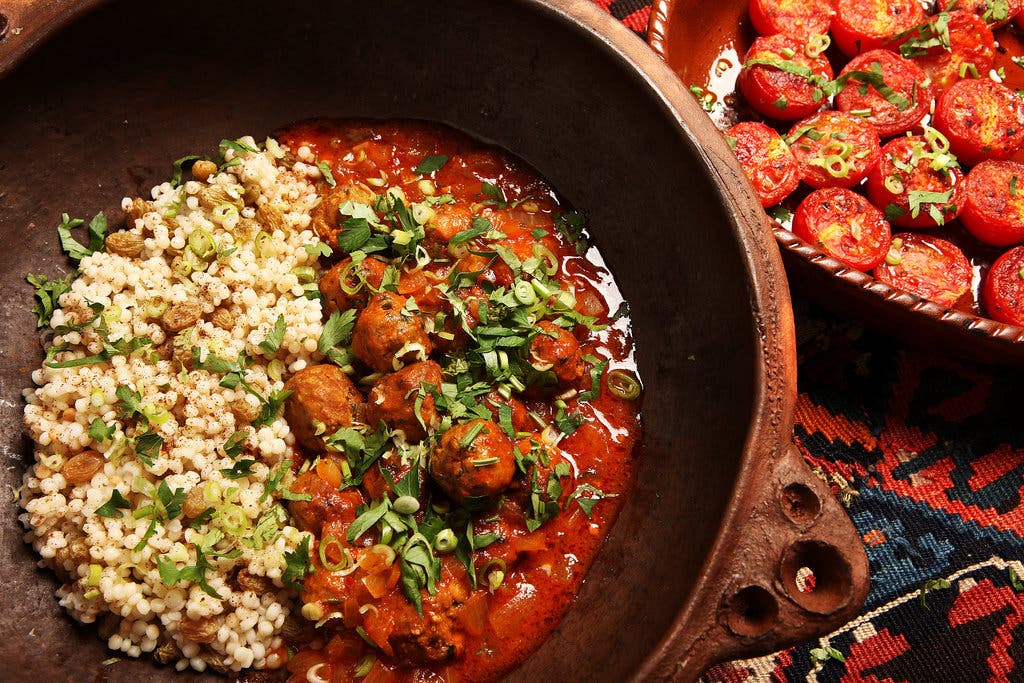
By David Tanis “In France, meatballs are called boulettes, and by far the favorite versions are the spice-scented North African type. Since I like things a bit spicier, my boulettes are more like Tunisia ones, in which hot pepper is more assertive.”
Note: While making this recipe, I used lamb instead of beef and made some substitutions.
The saffron tomato sauce for North African Meatballs:
2 tablespoons olive oil
1 and ½ cups finely diced onion
3 garlic cloves, minced
2 tablespoons tomato paste (This sauce was too thin, so I substituted 1 can of Muti crushed tomatoes.)
1 inch piece cinnamon stick
Large pinch saffron, crumbled
Salt and pepper
vegetable broth or water (One empty Muti can of water)
For the meatballs:
1 and ½ cups cubed day-old firm white bread (I substituted 1/2 cup of breadcrumbs)
1 cup milk
1 pound ground beef or lamb
1 large egg, beaten
1 teaspoon salt
¼ teaspoon black pepper
4 garlic cloves, minced
⅛ teaspoon grated nutmeg
1 teaspoon ground ginger
1 teaspoon turmeric
2 teaspoons paprika
¼ teaspoon cayenne (optional)
¼ teaspoon ground cloves
¼ teaspoon ground coriander
½ teaspoon ground cumin
3 tablespoons chopped parsley
3 tablespoons chopped cilantro
3 tablespoons finely chopped scallion
All-purpose flour, for dusting
Olive oil or vegetable oil
For the couscous: (optional)
1 cup giant couscous, m’hamsa, or medium couscous
2 tablespoons butter
½ cup golden raisins, soaked in hot water to soften, then drained
Salt
¼teaspoon ground cinnamon
Preparation:
Step 1: Make the sauce: Heat oil over medium-high heat in a wide, heavy bottomed saucepan. Add onion and cook without browning until softened, about 5 minutes. Add garlic, cinnamon and saffron, and stir well to incorporate. Season generously with salt and pepper, and allow to sizzle for 1 minute more. Add crushed tomatoes, water or broth and simmer gently for 5 minutes. May be made several hours in advance, up to a day.
Step 2: Make the meatballs: Put bread cubes(or crumbs) and milk in a small bowl. Leave bread to soak until softened, about 5 minutes, then squeeze dry.
Step 3: In a mixing bowl, put squeezed-out bread, ground meat and egg. Add salt, pepper, garlic, nutmeg, ginger, turmeric, paprika, cayenne, cloves, coriander and cumin. Mix well with hands to distribute seasoning. Add 2 tablespoons each of parsley, cilantro and scallion, and knead for a minute. May be prepared several hours in advance, up to a day.
Step 4: With hands, roll mixture into small round balls about the size of a quarter. Dust balls lightly with flour. Heat a few tablespoons of oil, or a quarter-inch depth, over medium-high heat and fry meatballs until barely browned, about 2 minutes per side. Drain and blot on paper towel. Simmer meatballs in saffron-tomato sauce, covered, over medium heat for about 20-40 minutes, until tender. (May need to simmer longer.)
Step 5: Meanwhile, make the couscous, if desired: Cook according to package directions, fluff gently and stir in butter and raisins. Season with salt and cinnamon, and toss well.
Step 6: Garnish meatballs with remaining parsley, cilantro and scallion. Serve with couscous and roasted tomatoes if desired.
Another delicious potato recipe! The recipe is simple and mostly hands off; the potatoes just need to be tossed every so often for even crisping. While russets can be used, Yukon Gold potatoes are soft and creamy, and the longer they roast, the crispier the outsides will become. (Just don’t overdo it, or they’ll dry out.)
Note: I didn’t have chili powder. Still tasty.
INGREDIENTS
Yield: 4 to 6 servings
Chopped parsley or cilantro (optional)
1 teaspoon black pepper
1 teaspoon ancho chile powder or chili powder of choice, to taste (1/4 teaspoon may be enough) (optional)
½ teaspoon smoked paprika (1/4 teaspoon may be enough)
½ teaspoon garlic powder
½ teaspoon onion powder
½ teaspoon dried oregano
2 pounds Yukon Gold potatoes, diced into 1-inch cubes (about 5 large potatoes)
⅓ cup extra-virgin olive oil
1½ teaspoons kosher salt (such as Diamond Crystal), plus more to taste (start with 1 teaspoon)
Step 1: Heat the oven to 425 degrees with the rack in the center position.
Step 2: In a small bowl, combine the black pepper, chili powder (if using), smoked paprika, garlic powder, onion powder and dried oregano.
Step 3: Place the potatoes in the middle of a sheet pan, drizzle with olive oil and toss well. Sprinkle on the salt and toss again. Add the spice mix and toss once more, until the potatoes are coated. Scatter the potatoes across the pan in a single layer.
Step 4: Roast potatoes, turning with a flat metal spatula every 10 minutes, until they’re tender, about 35 minutes. If you’d like them crispier on the outside, continue roasting for 10 to 15 minutes more. Don’t worry if any pieces stick to the pan a little; just give them a little nudge with the spatula. (The crispy bits are the best.) Taste and sprinkle with more salt, if needed. Sprinkle with fresh herbs, if using, and serve.
This delicious recipe comes together quickly, and the thinly sliced asparagus doesn’t need much time to cook. Feel free to swap with any other vegetables that cook in just a few minutes, like thinly sliced green beans, or frozen peas. My only suggestion Is to use a little less honey, although my son loved this as printed.
1 tablespoon coconut or canola oil (can use 2-3 tablespoons of oil)
12 ounces asparagus, trimmed and thinly sliced on an angle
1 teaspoon unseasoned rice vinegar
1 lime, cut into wedges (optional)
PREPARATION
In a small bowl or measuring cup, stir together ¼ cup water with the honey, pepper and ½ teaspoon salt; set honey mixture aside.
In a medium bowl, stir together the flour, turmeric and 1 teaspoon salt. Add the chicken and toss until coated.
In a medium (10-inch) nonstick skillet, heat the oil over medium-high. Add the chicken and cook until the turmeric is fragrant and the chicken is golden brown on both sides, 2 to 3 minutes per side.
Add the asparagus, season with salt, stir to combine and cook until crisp-tender, 1 to 2 minutes.
Add the honey mixture and cook, stirring, until the chicken is cooked through and the sauce has thickened, 2 to 3 minutes.
Remove from heat and stir in the vinegar. Season to taste with salt and pepper. Serve with lime squeezed over top, if you like.
Note: I highlighted all the additions of salt. Definitely not necessary! Also, recipe needs the lime.