Kheer is usually made with whole milk. Note that the flavor of the milk you use will affect the overall taste and consistency. Cane sugar is traditionally used, but you can use maple syrup or coconut sugar instead.
Ingredients
4 cups milk (or almond milk for dairy-free, or 2 cups coconut milk, 2 cups milk)
1/2 cup Basmati rice
3 tablespoons organic cane sugar or coconut sugar
2 tablespoons raisins (optional)
½ teaspoon cardamom powder
5 strands of saffron (optional)
½ teaspoon rose water (optional)
Optional Toppings
tablespoons slivered almonds
tablespoons pistachios
Instructions
Soak the rice in water for 30 minutes or overnight. Rinse well in water until it runs clear.
In a medium saucepan, add milk and sugar. Turn the heat to medium-high and bring the milk mixture to a gentle boil.
Immediately reduce the heat to medium-low and add Basmati rice. Stir gently.
Simmer until the milk starts to thicken and the rice is tender. It will take about 20-30 minutes for the rice to milk mixture to reduce to about half its original amount. Stir frequently.
Stir in the raisins, cardamom, saffron and rose water, and cook for a few more minutes.
Turn off the heat and let the Indian rice pudding cool down. Add additional toppings, if desired, and serve or store for later.
Notes
To save the rice pudding for later, cool it down completely before storing it in an air-tight glass container in the refrigerator for up to 3 days.
Serve either warm or cold. To reheat the rice pudding, warm it in a small saucepan on medium-low heat, stirring frequently.
Today, I’m taking you to Cinnamon, a restaurant bringing high quality Indian and Sri Lankan cuisine, in the village of Rhinebeck, NY. My daughters have a home upstate, and this is one of our favorite dinner spots. Rhinebeck Village, established in 1683, is worth a visit, in itself, for its historic homes and architecture, hiking and biking trails, and its surrounding natural beauty. And at night, all over the village, white mini lights wrapped around the trunks and limbs of trees create a most magical effect.
We started our meal, this evening, with vegetable samosas, Indian pastry stuffed with vegetables and served with a dipping sauce. However, on a previous occasion, we enjoyed Palak Chaat, crisp fried spinach leaves topped with crisp noodles, chopped onions and fresh tomatoes drizzled with cilantro and mint chutney, tamarind sauce, and yogurt.
For four of us, we ordered Chicken Tikka Masala,tandoori grilled boneless chicken in a tomato cream sauce with mild spices, Lamb Shank Rogan, lamb shank slow-cooked in a sauce of saffron, garam masala and a blend of chilies,Saag Paneer, chopped spinach and chickpeas simmered in a creamy sauce of ginger, turmeric, coriander, cumin with cubed homemade cheese, all accompanied by bowls of basmati rice, and several orders of hotGarlic Naan, the classic Punjab bread topped with melted butter, minced garlic and fresh cilantro. Desert all around was Rice Kheer, rice pudding with rose water, cardamom, and saffron.
For vegetarians, there is a plethora of choices, and you can also ask for the degree of spiciness that you can tolerate. Mine is always mild. So, if you decide to visit Rhinebeck Village, definitely enjoy a wonderful meal at Cinnamon.
Naan
03/2022: Adam and I returned for a lunch recently, and the food was as we remembered it – excellent! This time, we enjoyed the LAMB MASALAWALA (tandoori grilled, grass-fed rack of lamb in a 24-hour marinade of ground cashews and yogurt with fresh mint, ginger, garlic served with grilled vegetables). Along with vegetables samosas and hotGarlic Naan, the SAAG PANEER (chopped spinach simmered in a creamy sauce of ginger, turmeric, coriander, cumin with cubed homemade cheese)was so good we took an order home!
This might seem like a complicated recipe but by doing it in steps, it’s not. Believe it or not, the pasta you use is important. I buy fresh pasta sheets from Zabar’s in NYC (having been disappointed by others). From nymag.com: Use ¾ to 1 pound of fresh pasta sheets (about 7×4 inches), or dried lasagna noodles blanched for 6 minutes and refreshed (put in ice water).
Step 1: Making the Ragu
• 5 cloves garlic • 2 medium onions • 4 ribs celery • 2 carrots • 1/4 cup olive oil • 1 lb ground veal (or ground beef)) • 1 lb ground pork • 4 oz pancetta • 6 oz tomato paste • 1 cup dry white wine • 1 cup whole milk • 1 tsp fresh thyme leaves
Method
To begin the ragu, first émincé the garlic. Finely chop the onions, celery and carrots.
Next, preheat a large, heavy-bottomed pot over medium heat. Once hot, add the oil and vegetables (also known as mirepoix) and let cook until translucent, but not browned, about 5 minutes or so.
Gather the veal and pork. Very finely chop the pancetta or cut it into quarters and then pulse it in a food processor until ground. Once the vegetables are translucent, add all of the meat and increase the heat to high. Let the meat brown, stirring frequently, for about 15 minutes.
While the meat cooks, gather white wine, milk, tomato paste and thyme. Once the meat has browned nicely, add the tomato paste and stir to combine. Then add the white wine, milk and fresh thyme. Stir again, scraping the bottom if needed. Let everything come just to a boil, then reduce the heat to low and let simmer for 1 to 1 1/2 hours.
As the ragu cooks, remember to stir it occasionally, to prevent it from sticking or scorching. In the meantime, you can prepare the besciamella.
Step 2: Making the Besciamella
• 5 tbsp unsalted butter • 1/4 cup all-purpose flour • 3 cups whole milk • 1 to 2 tsp sea salt • 1/2 tsp grated nutmeg
Method
To make the besciamella, heat a saucepan over medium heat and melt the butter. Once melted, add the flour to create a roux and stir until smooth. Cook for about 6 to 7 minutes, stirring frequently, until it turns a light-golden brown.
Meanwhile, in a separate pot, heat the milk to just under a boil. Once the mixture has browned and the milk has heated, add the milk to the roux, about one cup at a time. Whisk constantly, until very smooth, bringing it back to a boil each time. Once all of the milk has been incorporated and the mixture has come back up to a gentle boil, turn the heat to low and let cook for about 10 minutes. Stir occasionally. The sauce should nicely coat the back of a spoon. Once done, remove from the heat and season with the salt and freshly-grated nutmeg. Transfer to a bowl and place plastic wrap directly onto the surface, to prevent a skin from forming. Leave a bit of space around the edges for the steam to escape while it cools.
Step 3:
Assembling the Lasagne
• 8 oz Parmigiano-Reggiano
Method
Before assembling the lasagne, preheat your oven to 375º degrees Fahrenheit.
Grate the Parmigiano-Reggiano into a bowl and set aside. Then gather the besciamella and give it a good stir to make sure it is nice and smooth. Have the ragu and your *lasagne pan ready.
To begin assembling, spread a layer of ragu over the bottom of the pan and top with a bit of the cheese. Then add a layer of pasta. It is okay if the noodles overlap slightly. Add a thin layer of besciamella, spreading it out slightly. Add another layer of ragu. Because the pasta is so delicate and thin, you can create many layers; so, don’t worry about every spot being covered with filling. Sprinkle with the cheese and add another layer of pasta. Continue and repeat the same process, layering the noodles, besciamella, ragu and then the cheese. The last layer should be a layer of noodles topped with a generous coating of besciamella. Spread the besciamella out to cover the edges so the noodles don’t dry out during baking.
Sprinkle with a bit more cheese and bake for approximately 45 minutes. When done, the edges and top should be slightly browned and the sauces should be bubbling. Let stand for 10 minutes before serving and enjoy one of the best lasagne’s you’ll ever have.
*Note: This is best made in an extra deep pan. I use my dutch oven to create multiple layers by trimming the lasagna sheets to fit.
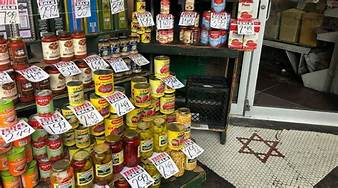
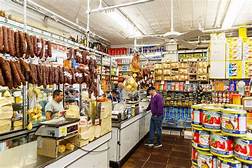
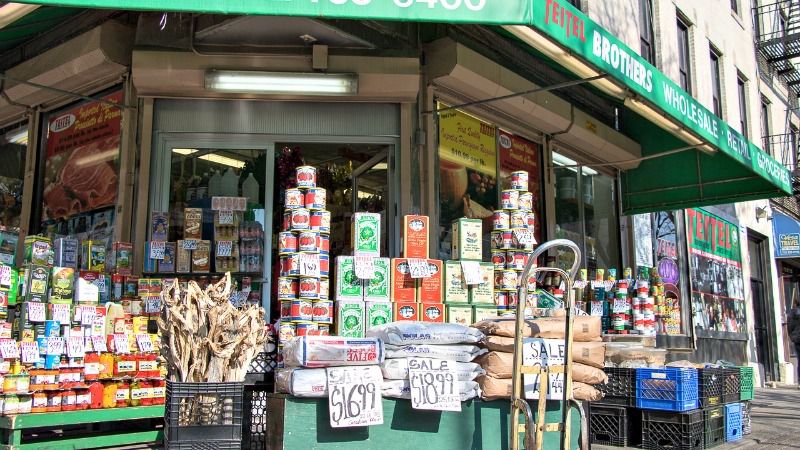
I have been shopping on Arthur Avenue for more than twenty years. I discovered it while teaching not far from there and find it just as wonderful today as I did then. Over the years I have frequented many of the shops and restaurants but, after trial and error, now shop and dine at a select few. My most favorite destination is Teitel Brother’s Imports. It is a third generation family business run by a Jewish family- not from Italy, but from Austria. (That explains the Star of David mosaic at the entrance.) It opened in 1915 and does not sell kosher goods but rather all kinds of Italian items from salami and balsamic vinegar to olive oil. (Their Balsamic Vinegar of Modena, Marca Francesconi, is the best I have ever tasted.) I stock up on Mutti tomato products, Lavazza coffee, Callipo tuna, and De Cecco pastas, to name a few. Their prices are excellent, always less, and their imported meats and cheeses, fresh mozzarella, and fresh sweet and hot sausage are delicious and of the highest quality.
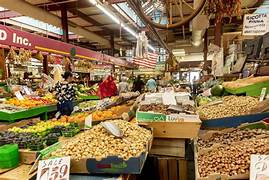
If you wish for an authentic brick oven pizza,*Trattoria Zero Otto Nove is the place to go. I never miss a stop at Addeo and Sons Bakery, a family run business for eight decades. It doesn’t offer much more than freshly baked bread, and that’s all they need. And lastly, just walk into the Arthur Avenue Retail Market, which was established by Mayor Fiorello LaGuardia in the 1930’s to get push-cart vendors off the streets. You won’t know where to look first!
The Retail Market
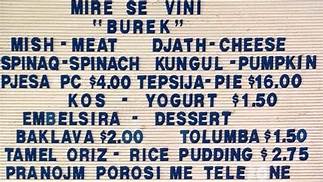
Tony & Tina’s Pizza: Albanian Bureks on Arthur Avenue
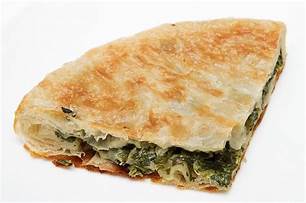
On another visit to Arthur Avenue, my daughters and I tried Tony and Tina’s bureks. I am not a connoisseur of these flaky dough pastries, but these were wonderful. We especially enjoyed the spinach ones which were fragrant with onion. I suggest you eat them there, however, you can reheat them at home in a very hot oven.
Inside a burekspinach burekThe menu which includes homemade yogurt
Luna Cafe
03/17: While on Arthur avenue for shopping, I decided to try this cafe. I had been there before when it was an Italian Pastry Shop, and being hungry, and noticing they now served lunch, entered. I was pleasantly surprised that this is now an Albanian eatery that not only serves Abanian food and Albanian desserts, but Italian food as well.
Perusing the menu, I choose goulash. It arrived on a bed of mashed potatoes, along with a salad of pickled cabbage and onions, and was delicious! When I got home, I spent an hour on Google looking for Albanian goulash recipes. I’ll submit the recipe if I’m successful! Wish me luck!
*Trattoria Zero Otto Nove: Further along on this blog is a review of this wonderful restaurant. It’s the place to visit if you want delicious pizza and Italian food.
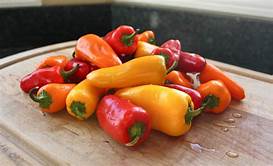
Stem and seed the peppers. Slice them and pack into jars. Bring vinegar, sugar, water, and salt to a raging boil. Pour over peppers and seal jars (cover). Let cool at room temp overnight. Store in refrigerator.
Add a crusty bread, a favorite cheese, and a green salad for a complete meal.
Ingredients:
3-4 Tablespoons of olive oil
2 carrots peeled and diced
½ onion peeled and diced
2 celery stalks diced
Kosher salt to taste
3 garlic cloves, peeled and crushed
1 teaspoon chopped rosemary (optional)
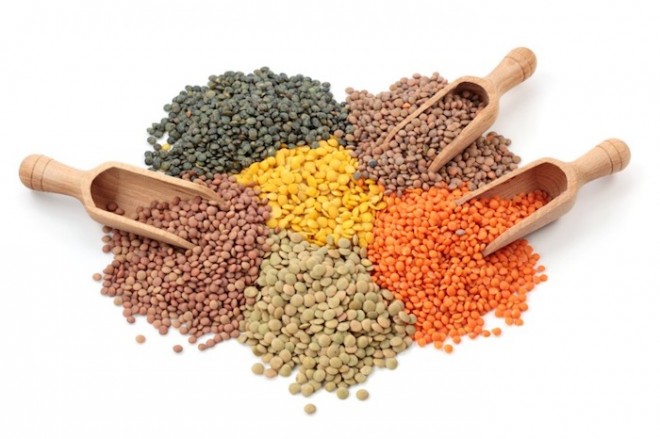
1 cup French green lentils (Any kind of lentil will do.)
*7-8 cups water or chicken stock
Pour the oil into a heavy-bottomed soup pot and heat over medium heat. Add the onion, carrot, and celery and sauté until tender, 5 to 10 minutes. Season with a little salt and pepper and add the garlic and rosemary (optional). Add the lentils and stir while adding the water or stock to the pot. Bring to a boil, skimming any foam off the surface. Reduce the heat to a simmer and cook until the lentils are soft and fully cooked, 25 to 45 minutes.
*If using chicken stock, I would use half stock/half water. You don’t want the chicken flavor to overtake the soup. However, instead of stock, for flavor I add a piece of salt pork (about 6 ounces) or about 4 ounces of pancetta to the pot after the vegetables are sauteed. Let flavors meld for a minute or two before continuing for the full 45 minutes of cook time.
If using salt pork or pancetta, taste and add salt at the end of cooking. Remove the pork or pancetta before serving.
Leftovers: If the soup is too thick, add a little water to thin it out. Then adjust seasonings.
Notes: For a slightly different version, sizzle cumin seeds in olive oil and stir into the soup before serving.
Brunch today was at Kokomo, a restaurant which brings Caribbean Food to the Brooklyn waterfront and reviewed 10/06/2020, again by Pete Wells. They have a beautifully constructed outdoor platform and also tables set up under large awnings. It was the perfect setting for such a pleasant day, and their brilliant colors, music and general ambience transported me to the West Indies.
Wells reviewed their dinner menu, but the brunch menu has many of the same items. He recommended their flatbreads, jerk chicken, and Escovitch Snapper (snapper marinated in vinegar, spices and veggies) and mentioned that “the substantial line of vegan main courses is conceived with flavor in mind.”
As I perused the menu, I was attracted to the Pikliz Fish Sandwich with pickled cabbage slaw, fried fish fillet, garlic mayo, and house fries, but to no avail. They didn’t have it today, so I chose their egg frittata. Adam chose their Caribbean spiced lamb, and both dishes were good, as well as the service. We were intrigued with their rum raisin bread pudding for dessert served with vanilla ice cream and topped with coconut whipped cream. It arrived with an edible orchid (crunchy), and the pudding was yummy! So, yes to a repeat. I’m looking forward to trying some of their other dishes.
This recipe recently appeared in the New York Times, and the idea of making my own almond paste intrigued me. Not only do you make the almond paste in your food processor but then continue to finish the recipe in the same work bowl. Easy cleanup! But that’s not the best part. The cake was amazing. According to Melissa Clark, it “walks the line between dense and light, with a fine, moist crumb and deep marzipan flavor that comes from a combination of homemade almond paste and a touch of almond extract.”
In the Times, if you wish, the cake is topped with peaches and cream, but I prefer to serve it plain with just a dusting of powered sugar. It will keep for up to two days well wrapped at room temperature or five days in the fridge. (Take out and serve at room temperature.)
INGREDIENTS
1 ¼ cups/280 grams softened unsalted butter, plus more for the pan
1 cup/128 grams all-purpose flour, plus more for the pan
1 packed cup/125 grams almond flour or sliced, blanched almonds ( I used sliced, blanched almonds.)
1 cup/125 grams confectioners’ sugar, plus more for serving
6 large eggs plus 1 egg white, at room temperature
½ teaspoon almond extract (might need 1 teaspoon)
½ teaspoon fine sea salt
1 ¼ cups/250 grams granulated sugar
2 teaspoons vanilla extract
1 ½ teaspoon baking powder
Sliced peaches, for serving
Whipped crème fraîche or whipped cream, for serving
PREPARATION
Heat oven to 325 degrees. Butter and lightly flour a 9- or 10-inch springform pan.
Place almond flour and confectioners’ sugar in a food processor and pulse to combine. Add egg white, almond extract and 1/4 teaspoon salt, and process until it all forms a paste.
Add granulated sugar to the food processor and pulse until everything is well combined and crumbly. Add butter and vanilla, and continue processing until light and fluffy, about 2 minutes. With the machine running, add eggs one at a time, processing until smooth between eggs.
Stop the machine, scrape down the sides with a rubber spatula, and add flour, baking powder and remaining 1/4 teaspoon salt. Pulse a few times, until the dry ingredients are just integrated. (Be careful not to over process.)
Pour the batter into the prepared pan. Bake until the cake is golden on top and a toothpick inserted into the center comes out clean, about 60 to 70 minutes for a 10-inch pan and 70 to 80 minutes for a 9-inch pan. Transfer the pan to a wire rack and let cake cool completely before unmolding and serving.
Put the peach slices in a bowl and taste a slice. If they seem tart, sprinkle peaches with a little confectioners’ sugar.
Just before serving, dust the top of the cake with confectioners’ sugar. You can serve slices of the cake with the peaches and cream on the side or dollop some whipped cream on top of the cake and top with the peaches before cutting.
Line a sheet pan with paper towels and set it near the stove. In a large bowl, combine the eggs, flour, salt and pepper and whisk until smooth.
Using the largest holes of a box grater, grate the potatoes and onion, discarding any tough, outer pieces of the remaining onion, onto a clean dish towel or large piece of cheesecloth. Wring over the sink to drain as much liquid as you can.
Immediately add the potatoes and onion to the bowl with the egg mixture and mix gently but thoroughly with your hands or a wooden spoon.
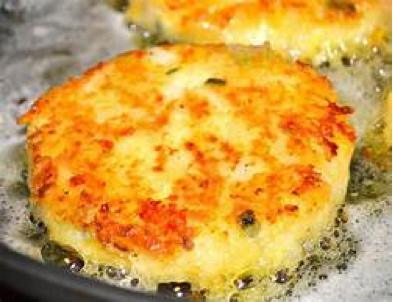
In a large (12-inch) skillet, heat ⅓ cup canola oil over medium-high until shimmering. Using a ¼ cup measure, scoop mounds of the potato mixture onto the skillet, using the bottom of the measuring cup to flatten the pancakes slightly. Work in batches to avoid overcrowding. Fry until golden brown, 2 to 3 minutes on each side. (If the pancakes are browning too quickly or the oil begins smoking, lower the heat.) Transfer the pancakes to the prepared sheet pan and sprinkle lightly with salt.
Repeat with the remaining mixture, adding more oil and adjusting the heat as necessary, scooping out any small pieces of batter left in the pan, and draining any excess liquid that collects in the bowl. Serve hot with sour cream and chives, if desired.
From The Wall Street Journal
Grate 3 largeIdaho potatoes* and a large onion, place them in a colander and squeeze vigorously to drain liquid.
Mix with 2 eggs, 2 Tablespoons of all-purpose flour, 1 teaspoon kosher salt, and pepper to taste.
Mix, form into patties, and fry until browned on both sides.
Chefschoice: Canola oil (My choice: peanut oil)
* I use 3 large Yukon Gold potatoes, instead of the Idaho, and lately have been adding some grated sweet potato to the mix. Adds color and just a little sweet taste.
After reading a 2012 NYT review of Royal Seafood, on Mott Street in Chinatown, by Pete Wells, Adam and I decided to try it. It was just after Hurricane Sandy, and once Chinatown reopened, we were so happy to get out. We followed the suggestions in the article and ordered the lobster, although it didn’t appear anywhere on the menu. It was chopped up and “wok-fried with a sticky, Cantonese sauce of scallions and slivers of ginger (NYT).” We also ordered the crispy fried bean curd (now served with mushrooms), and a sauteed green with garlic. I can’t remember anything else we might have eaten, but we have been back many times since, for lunch and dinner, with family and friends. It never disappoints. Recently, my grandson loved the steak cubes with chives and the house special fried rice. Dinner is usually quiet, but lunch, especially on weekends, draws crowds for its dim sum. Wells suggest that you “sit on an aisle….sitting too far from the trolleys puts you at risk of missing a favorite dumpling.”
Menu items I haven’t tried yet (that were recommended in the article) are crispy fried chicken, a fried whole flounder, springy e-fu noodles with fat mushrooms, house special lamb chops in a black pepper sauce, and the West Lake beef soup with bright green cilantro leaves. I will try these and hopefully they will still be as delicious as the reviewer found them.
In an article published in 2019, Where Should You Eat in New York? Go to These Favorite Spots, several of the Times contributors suggested Nom Wah Tea Parlor on Doyers Street. It has long been a favorite of ours for chicken and pork shumai, steamed shrimp and snow pea leaf dumplings, original “OG” egg rolls, stuffed eggplant, rice rolls, and Chinese greens in oyster sauce.
I am constantly on the lookout for new restaurants in Chinatown and will write about those that are worth a visit.
“OG” egg rolls
New addition: Hakka Cuisine reviewed by Pete Wells, October, 2023, is a beautiful and very clean restaurant in Chinatown. We only ordered one of the dishes suggested by Mr. Wells, the Hakka stuffed tofu: little pork sausage patties resting in thumbprints scooped out of bean-curd cubes in a light, savory sauce. Most of the dishes were delicious, but some were not. The spring rolls, and scallops served on clam shells over cellophane noodles were a disappoint, however the Hakka Mei Fun, a seafood noodle dish was wonderful. My grandson loved a chicken and peanut dish along with shrimp fried rice. The Hakka people are nomadic tribes who originated in China and whose cooking focuses on the texture of food. Their menu also features items found in traditional Chinese restaurants.(Sorry, closed!)









 My Picky Mother