Gochujang Buttered Noodles

By Eric Kim: This recipe is from a NYT article, Our 50 Greatest Hits, According to You.

Eric Kim slips a quarter-cup of fiery gochujang paste into a butter-garlic sauce to make this simple, six-ingredient dish, which has quickly risen through the ranks of Cooking favorites. A dose of honey and sherry vinegar balance the heat so you’re left with a dinner that’s sweet, spicy and just a little tangy.

NOTE: This is a delicious recipe, especially if you enjoy spicy food. I made the single serving suggestion, but it was still too spicy for me. When I make it again, I will use a teaspoon instead of a tablespoon of gochujang. The noodles don’t need much salt; I only added some to the pasta water.

INGREDIENTS

Yield: 4 servings

  • 1 pound spaghetti or other long pasta
  • 6 tablespoons unsalted butter
  • 12 garlic cloves, finely chopped (about ⅓ cup)
  • Salt and pepper
  • ¼ cup gochujang paste (not sauce)
  • ¼ cup honey
  • ¼ cup sherry vinegar or rice vinegar
  • Finely chopped cilantro or thinly sliced scallions (optional)

PREPARATION:

  1. Bring a large pot of water to a boil. Add the spaghetti and cook according to package instructions. Reserve 1 cup of the cooking water. Drain the spaghetti and return to its pot.
  2. While the pasta cooks, melt 4 tablespoons of the butter in a skillet over medium-low. Add the garlic and season generously with salt. Cook, stirring occasionally, until the garlic starts to soften but not brown, 1 to 3 minutes.
  3. Stir in the gochujang, honey and vinegar, and bring to a simmer over medium-high. Cook, stirring constantly, until the mixture reduces significantly, 3 to 4 minutes; when you drag a spatula across the bottom of the pan, it should leave behind a trail that stays put for about 3 seconds. Remove from the heat.
  4. Transfer the sauce to the pot with the spaghetti and add the remaining 2 tablespoons butter. Vigorously stir until the butter melts. Add splashes of the pasta cooking water, as needed, to thin out the sauce. Taste and season with salt and pepper (pepper not necessary). Top with the cilantro or scallions (if using) and serve immediately.

TIPS

  • Be sure to purchase plain gochujang paste, not gochujang sauce, which often includes additives like vinegar and sugar. To easily measure out gochujang, swipe the inside of a measuring cup with a little neutral oil, which will get it to slip right out.
  • To make a single serving, follow the recipe using 4 to 5 ounces fresh or instant ramen noodles; 1½ tablespoons unsalted butter (1 tablespoon to fry the garlic and ½ tablespoon for the sauce at the end); 3 garlic cloves; 1 heaping tablespoon gochujang; 1 tablespoon honey; 1 tablespoon sherry vinegar or rice vinegar. Decrease the cook times throughout by 1 to 2 minutes

This can be found in an Asian market. Buy the smallest amount you can.

Zula Grill and Veselka

I have two new restaurants to recommend. The first, a kosher Israeli restaurant, Zula Grill, is in Englewood, New Jersey. Best to go with a group so you can sample many of their delicious options like their Salatim Sampler,
a bit of all the staple dips and salads that compose an Israeli dinner table. My personal favorites are: Babaganoush, roasted eggplant and tahina dip, Matbucha, Moroccan stewed tomato dip, the Classic Chickpea hummus with warm chickpeas and lemon, an Israeli salad, and the best ever Falafel with tahina sauce, all served with traditional pita bread baked in house. Of course they have a full menu which includes lamb, chicken, beef and fish and a Kids’ Meal section. And, not to miss in Englewood is ShopRite, a mega supermarket right down the street. Excellent prices, a huge selection of groceries, and if you spend $100 and have a New York license, they will give you $6.00 back towards your toll.

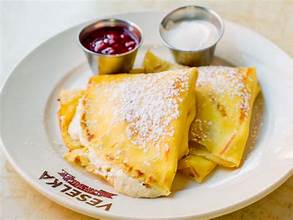
The second is Veselka, a Ukrainian diner’s newest location in Williamsburg, Brooklyn. My son and I went for brunch and really over ordered, wanting to try so much of their menu.

Their potato pancakes are quite good, served with sour cream and applesauce. They are large, crispy and fluffy – not like homemade- but enjoyable. I wanted to try their pierogis -Adam liked them, but I thought their “skin” was too thick. What we loved on this visit was their Ukrainian Borscht (beet soup), pickled red onions and cucumbers, their side of beets mixed with horseradish, and their blintzes, Ukrainian-style crepes filled with lightly sweetened farmer’s cheese and raspberry sauce. We want to return to try some of their classics such as: Beef Stroganoff, Veal Goulash, Chicken Paprikash, Ukrainian Meatballs, and of course, another order of blintzes.

Quick Pickled Red Onion

By Naz Deravian
Quick Pickled Red Onion

Pickled red onion livens up a wide array of dishes, providing a bright crunch and a festive fuchsia hue. The bite of the onion itself is tempered in a sweet, salty and sour brine. Choose from a variety of vinegars, depending on what’s in the pantry, including white, red or apple cider vinegar. For extra flavor, feel free to add a couple of garlic cloves, mustard seeds, allspice berries or coriander seeds to the brine. The pickled onion can be used right away or stored in the fridge for up to 1 week; their flavor will develop the longer they sit. Use them as a topping for any number of dishes, including saladssoupseggs and burgers

INGREDIENTS

Yield: 2 cups (with pickling liquid)

  • 1 large red onion
  • 2 teaspoons kosher salt (such as Diamond Crystal)
  • 2 teaspoons granulated sugar
  • ¾ cup vinegar (white or red wine, distilled or apple cider)

PREPARATION

  1. Thinly slice the red onion by halving through the root and slicing in the same direction. Separate the slices by hand, as best you can, without getting too obsessive. Place the onion slices in a heat-proof, wide-mouth jar or container (about 1 pint capacity). It might seem like they won’t fit, but the onion slices will shrink as they pickle.
  2. Add the salt, sugar, vinegar and ¼ cup water to a small saucepan. Heat over medium-high, stirring to dissolve the salt and sugar. As soon as the mixture comes to a boil, remove from the heat and pour half of the liquid over the onion, pressing down the slices with the back of a spoon. Add the remaining liquid, continuing to press down the slices.
  3. Cover and give the jar a gentle shake. Set aside to pickle for about 30 minutes. Serve right away, or cool to room temperature and place in the fridge in the pickling liquid, covered, for up to 1 week.

From Debbie J, thank you. An alternative recipe:

1 cup white vinegar, 3/4 cup sugar, 1/2 cup water

Melt ingredients on stove and then keep in refrigerator. Cut up cucumbers, peppers and red onion. Put a good amount of dressing on them, add salt and pepper, and some feta cheese. Dress your salad 1/2 hour before you eat.

Note: I have been eating these pickled onions all week – on everything! It must be my Russian ancestry, speaking of which I want to recommend a terrific book if you haven’t already read it, A Gentleman in Moscow, by Amor Towles. It’s about a count, who after the  Bolshevik revolution of 1917, is placed under house arrest at his current residence, the Hotel Metropol in central Moscow. It is also a British television limited series consisting of eight episodes. Not to miss!

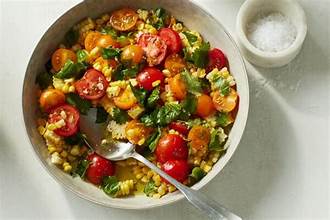
Corn Salad With Tomatoes, Basil and Cilantro

By Genevieve Ko

High summer produce comes together in this simple mix, tangy with lime juice and full of fresh herbs. Even in the height of the season, corn gets a touch sweeter when heated, and the easiest way to do it is in the microwave. It takes just a few minutes to zap the corn cobs in their husks, which makes them easy to shuck. The silks will slip right off the sweeter and still-crisp corn. Picking basil and cilantro leaves by hand then tearing them right over the salad keeps their delicate fragrance intact. Serve this with anything off the grill or alongside tacos or sandwiches.

INGREDIENTS

Yield:4 to 6 servings

  • 5 ears of corn
  • 1 pint cherry or grape tomatoes, halved
  • 1 lime
  • 3 tablespoons extra-virgin olive oil
  • Salt
  • ¼ teaspoon minced seeded fresh habanero or other very hot chile (optional)
  • ½ cup fresh basil leaves
  • ¼ cup fresh cilantro leaves

PREPARATION

  1. Microwave the corn in their husks on high for 3 minutes. Shuck the corn — the silks will come off easily. (If you want to boil or steam the corn on the stovetop, you can shuck the corn first then cook just until brighter in color, 2 to 3 minutes.) Cut the kernels off the cobs, transfer them to a large bowl and add the tomatoes.
  2. Finely grate the zest of the lime directly over the corn mixture, then squeeze the juice from the lime all over. Add the oil, a generous pinch of salt and the chile, if using. Mix well, then tear the herbs over the salad and gently fold them in. Season to taste with salt and serve, or refrigerate in an airtight container for up to 1 day.

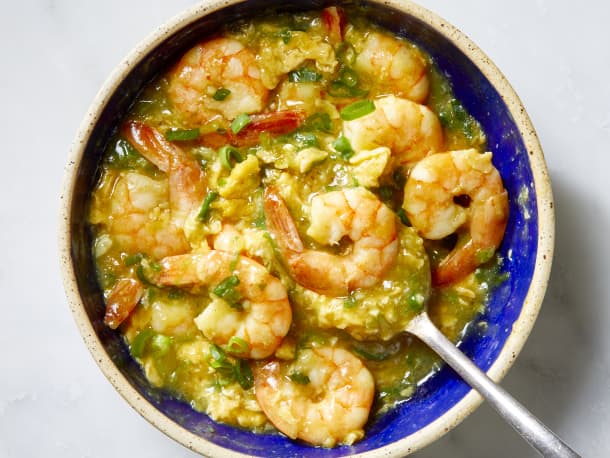
Gambas al Ajillo (Spanish Garlic Shrimp)

By David Tanis

This 15-Minute Shrimp Dish Will Transport You to Spain. Sweet, briny prawns (or larger shrimp in the United States) are sautéed with lots of garlic and olive oil, finished with a touch of hot pepper, and ready in less than half an hour. Don’t leave behind the flavorful extra-virgin olive oil, which is perfect for sopping up. Quick! Someone get a crusty loaf for just that purpose.

Note: This is not a shrimp scampi recipe, although it uses most of the same ingredients. I cooked the shrimp longer than suggested and added small bow tie pasta at the end. Didn’t have a crusty loaf!
INGREDIENTS

Yield:4 servings

  • 1½ pounds large shrimp, peeled and deveined (about 20)
  • Salt and black pepper
  • ½ cup extra-virgin olive oil
  • 8 or more large garlic cloves, thinly sliced lengthwise
  • 4 small dry red peppers, such as chile de árbol, or ½ teaspoon red-pepper flakes
  • ¼ cup white wine
  • ½ cup chopped parsley

PREPARATION

  1. Rinse shrimp with cold water and pat dry. Season with salt and pepper on both sides.
  2. Heat oil in a wide skillet over medium-high. When oil is wavy, add garlic, hot pepper and a pinch of salt, and turn heat to medium. Let garlic simmer gently without browning, stirring occasionally, for 2 or 3 minutes.
  3. Turn heat to high. Add shrimp to pan in one layer, without crowding, and cook for 1 minute. Add wine and let it evaporate, about 2 minutes. Turn shrimp over and cook just until firm and pink, 1 to 2 minutes more. Stir in parsley and transfer shrimp to a serving platter or individual bowls. Pour sauce over and serve immediately.


Zucchini Pasta With Tuna and Chile Paste

By Melissa Clark

Spaghetti with tuna is one of those adaptable pantry dishes that you can dress up with whatever you have on hand. Just cook alliums (garlic, onion, scallions or shallot) in plenty of olive oil, add pasta water and al dente pasta to the pan, and finish with a can of tuna flaked on top. This version adds zucchini, fresh herbs and any kind of chili paste you like (gochujang, harissa, aji amarillo, sambal oelek or Sriracha) for brightness and heat. Just note that some chili pastes are more fiery than others, so if you’re unsure how much to add, gradually dab it in it, tasting as you go. Then make this in summer when zucchinis are abundant, or substitute other vegetables (eggplant, peppers, greens) as they come into season. Simple, thrifty and very satisfying, it’s an afterwork dish to make on repeat.

Yield: 2 to 3 servings

  • ½ teaspoon fine sea or table salt, more as needed
  • 8 ounces long, thin pasta, such as bucatini, spaghetti or linguine
  • 3 tablespoons extra-virgin olive oil, more for drizzling
  • 4 scallions, thinly sliced, white and green parts separated (You can use the whole bunch.)
  • 1 pound zucchini, trimmed, halved lengthwise and sliced into ½-inch-thick half-moons
  • 3 garlic cloves, thinly sliced
  • 3 tablespoons drained capers
  • ½ to 3 teaspoons chili paste, more to taste
  • 1 cup roughly chopped fresh herbs, such as cilantro and mint
  • 1 (5- or 6-ounce) can tuna, drained (I used tuna in olive oil and did not drain it.)
  • 2 teaspoons fresh lemon juice, more to taste

PREPARATION

  • Step 1: In a well-salted pot of boiling water, cook pasta according to package directions until al dente. Drain, saving ½ cup pasta water.
  • Step 2: Meanwhile, in a large skillet, heat the oil over medium. Add scallion whites and cook until fragrant, about 1 minute. Add zucchini and ½ teaspoon salt, and cook until golden brown and tender, 7 to 12 minutes. Add garlic, capers and chili paste, and cook, 1 to 2 minutes, or until the garlic is fragrant. Taste and season with more salt if needed.
  • Step 3: Add ½ cup pasta water, let it reduce until there is just a little left in the pan, 3 to 4 minutes, then add pasta and ½ cup herbs, and toss well to coat. Stir in tuna and lemon juice, tossing well. Taste and add more chili paste, lemon juice or salt as needed.
  • Step 4: Serve, topped with remaining ½ cup herbs, scallion greens, and a drizzle of olive oil.

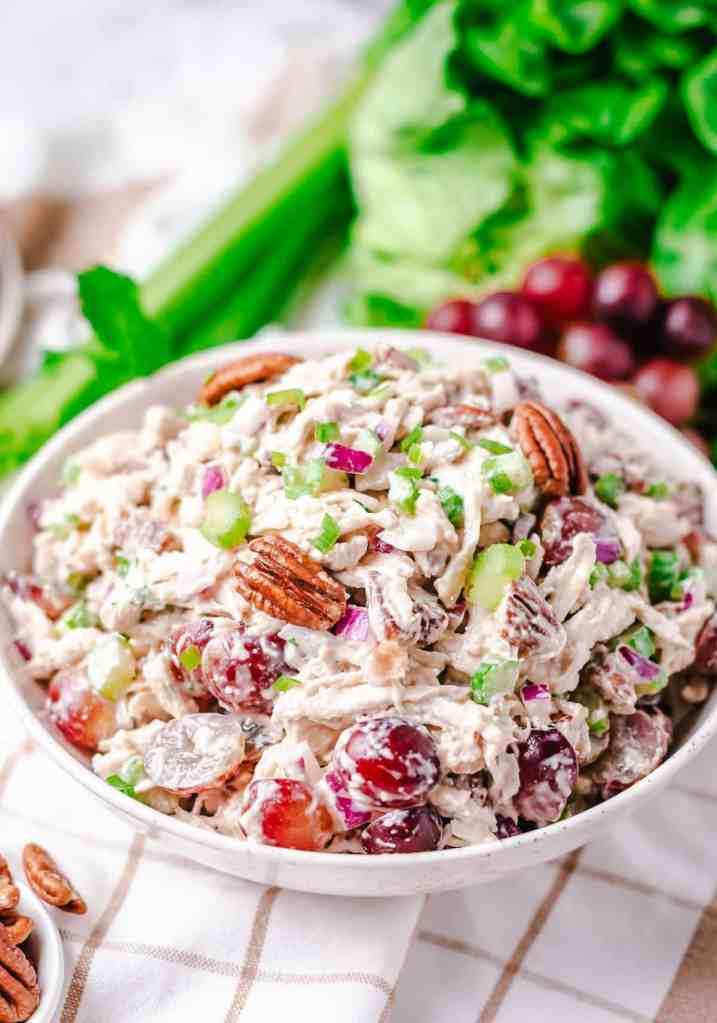
Easy Chicken Salad 

By Lidey Heuck

This simple chicken salad makes great use of leftover chicken, though you can certainly use a rotisserie chicken or roast or boil chicken breasts for this recipe. The recipe calls for classic crunchy mix-ins such as grapes, celery and pecans, but feel free to make it your own: Use a diced tart apple in place of the grapes, or toss in a handful of dried cranberries.

Note: I made this with freshly roasted chicken breasts, pecans, celery, red onions and grapes. If it’s going to stay over a day or two for lunches, I would suggest using the dried cranberries instead of the grapes.

To roast skin on, bone in, split chicken breasts: rinse and dry chicken. Place in a baking dish, rub with some olive oil, salt and pepper. Roast uncovered at 300* for about an hour until juices run clear. Cool before dicing.

INGREDIENTS

Yield: 4 to 6 servings

  • ½ cup mayonnaise
  • 1 tablespoon white wine vinegar
  • ½ teaspoon Dijon mustard
  • Salt and pepper
  • 3 cups diced cooked chicken breast
  • ½ cup finely chopped celery (about 1 large stalk)
  • ½ cup seedless grapes, quartered
  • ½ cup toasted pecans, chopped (see Tip)
  • ¼ cup minced red onion (about ¼ small onion)
  • 2 tablespoons chopped fresh parsley (optional)
  • Toasted bread, lettuce cups or crackers, for serving
  • PREPARATION
  • Step 1: In a large bowl, combine the mayonnaise, vinegar, mustard, ½ teaspoon salt and ¼ teaspoon pepper; whisk until smooth. Add the chicken, celery, grapes, pecans, onion and parsley and mix well. Season with more salt and pepper to taste. (May not need salt and pepper. Taste.)
  • Step 2: Serve on toasted bread or lettuce cups, or with crackers. Chicken salad will keep for up to 5 days in the refrigerator.

TIP

  • Toast pecans on a baking sheet at 350 degrees for 8 to 10 minutes. (This might be too hot and too long.)

Three Restaurants…

The first, a Russian restaurant, Hot Potato House, is in Brighton Beach, Brooklyn. According to the New York Times, “Brighton Beach is the grumpy neighbor of Coney Island and home to a population of Soviet exiles.” What a glorious neighborhood! Walking the streets, one feels as if they have been transported to a different country.

I have tried quite a few restaurants in the area, but this one, recommended by a Russian friend, stands out. It’s not fancy on the outside, but inside it’s warm and inviting and the food is good. As you can imagine, it has everything on the menu that can be done with potatoes – the potato pancakes are amazing, but the menu itself is extensive and features a wide variety of appetizers, smoked fish, classic soups, fowl, meats, fresh fish, salads and vegetables. And when you’re finished, take a walk along Brighton Beach Avenue where many of the storefronts are written in Russian, or just one block over, continue your stroll on their historic boardwalk.

 From the New York Times, “find the Georgian bakery on Neptune Avenue and devour the freshly baked cheesy khachapuri.” (Tone-Cafe Georgian Bread, 265 Neptune Ave, Brooklyn.)

The next, in Cobble Hill, Brooklyn, is Yemen Cafe & Restaurant, which serves traditional Yemeni food. The setting is “casual” – the decor hasn’t changed since it opened in the late 80’s, but don’t let that fool you. The food is plentiful and delicious, and the meal starts off with a platter of freshly made pita bread and a warming bowl of broth.

And lastly, in New York City, on the upper west side, is Elea, “blending true Greek Cuisine with a modern-day…Mediterranean cuisine.” The food is pricy, however, portions are ample, and everything we ate was excellent. (Horiatiki Salad – vine ripe tomatoes, red onion, peppers, olives and Arahova feta, a Tasting of (3) Greek spreads with grilled pita, Spanakopita, and Shrimp Orzotto.) There are brunch entrees as well as a selection of eggs, meats and fish.

Enjoy!

Cucumber Salad

By Ali Slagle

INGREDIENTS

Yield:4 servings

  • 1 pound cucumbers (about 6 Persian or mini seedless, or 1 English)
  • Salt
  • 3 tablespoons vinegar (red or white wine, rice or Sherry)
  • 1½ teaspoons honey or granulated sugar
  • ½ small red onion, thinly sliced and rinsed under cold water
  • 2 tablespoons chopped dill
  • Black pepper

PREPARATION

  1. Peel the cucumbers in alternating strips and trim ends (so that the cucumbers soak up the vinegary dressing but also hold their shape). If desired, halve lengthwise and scoop out the seeds. Thinly slice, then transfer to a colander set in the sink. Toss with 1 teaspoon Diamond Crystal kosher salt or ½ teaspoon fine sea salt and set aside to drain at least 5 minutes or up to 30.
  2. In a medium bowl, stir together the vinegar and honey until the honey is dissolved. Shake the cucumbers in the colander to get rid of any moisture, pour onto paper towels and pat dry, then transfer the cucumbers, red onion and dill to the bowl. Stir to combine, then season to taste with salt and pepper.

LIDIA BASTIANICH ‘S ITALIAN-AMERICAN MEAT SAUCE

….another wonderful meat sauce. I did not use the pork neck bones or the tomato paste and added 2 stalks of diced celery and 2 shredded carrots. Also, I only used about 1/4 cup of white wine. This is just my take on the recipe. You needn’t follow it.

Ingredients

  • TWO 35-OUNCE CANS ITALIAN PLUM TOMATOES (PREFERABLY SAN MARZANO, or 2 cans of Mutti crushed tomatoes)
  • ¼ CUP EXTRA VIRGIN OLIVE OIL
  • 2 MEDIUM YELLOW ONIONS, DICED (ABOUT 2 CUPS)
  • 6 TO 8 CLOVES GARLIC, PEELED AND CHOPPED FINE
  • 5 OR 6 MEATY PORK NECK BONES (ABOUT 3/4 POUND)
  • 1 POUND GROUND BEEF
  • 1 POUND GROUND PORK
  • SALT
  • 3/4 CUP DRY WHITE WINE
  • 1/3 CUP TOMATO PASTE
  • 4 BAY LEAVES
  • 1 ½ TEASPOONS DRIED OREGANO, PREFERABLY THE SICILIAN OR GREEK TYPE DRIED ON THE BRANCH, CRUMBLED
  • 3 TO 4 CUPS HOT WATER (Because I didn’t use tomato paste, I only used one empty tomato can of water.)

Directions

Pass the tomatoes and their liquid through a food mill fitted with the fine blade. Set aside. Heat the olive oil in a heavy 4 to 5-quart pot over medium heat. Add the onions and cook, stirring occasionally, until golden, about 8 minutes. Make a little room in the center of the pot, dump in the garlic and cook, stirring, until the garlic is lightly browned, about 2 minutes. Add the pork bones and cook, turning, until lightly browned on all sides, about 5 minutes. Add the ground beef and pork and season lightly with salt. Cook, stirring to break up the meat, until the meat changes color and the water it gives off is boiled away, about 10 minutes. Continue cooking until the meat is browned about 5 minutes. Add the bay leaves and oregano then pour in the wine. Bring to a boil and cook, scraping up the brown bits that cling to the pot, until the wine is almost completely evaporated. Pour in the tomatoes, then stir in the tomato paste until is dissolved. Season lightly with salt. Bring to a boil, adjust the heat to a lively simmer and cook, uncovered, stirring often, until the sauce takes on a deep, brick-red color, 2 to 3 hours. Add the hot water, about ½ cup at a time, as necessary to maintain the level of liquid for the length of time the sauce cooks.
Skim off any fat floating on top and adjust the seasoning as necessary. The sauce can be prepared entirely in advance and refrigerated for up to 5 days, or frozen for up to 3 months.