Classic Shrimp Scampi

By Melissa Clark

This classic recipe makes a simple garlic, white wine and butter sauce that goes well with a pile of pasta or with a hunk of crusty bread. However you make the dish, once the shrimp are added to the pan, the trick is to cook them just long enough that they turn pink all over, but not until their bodies curl into rounds with the texture of tires.

Note: My family prefers longer cooked shrimp. Still delicious!

INGREDIENTS

Yield:4 servings

  • 2 tablespoons butter. (I used more butter, to taste, than recommended. Felt the sauce was too acidic.)
  • 2 tablespoons extra-virgin olive oil
  • 4 garlic cloves, minced
  • ½ cup dry white wine or broth
  • ¾ teaspoon kosher salt, or to taste
  • ⅛ teaspoon crushed red pepper flakes, or to taste
  • Freshly ground black pepper
  • 1¾ pounds large or extra-large shrimp, shelled
  • ⅓ cup chopped parsley
  • Freshly squeezed juice of half a lemon
  • Cooked pasta or crusty bread

PREPARATION

Step 1: In a large skillet, melt butter with olive oil. Add garlic and sauté until fragrant, about 1 minute. Add wine or broth, salt, red pepper flakes and plenty of black pepper and bring to a simmer. Let wine reduce by half, about 2 minutes.

Step 2: Add shrimp and sauté until they just turn pink, 2 to 4 minutes depending upon their size. Stir in the parsley and lemon juice and serve over pasta or accompanied by crusty bread.

Hush Puppies

By Millie Peartree

Served with salted butter or on their own, hush puppies are the perfect starter or side for any meal, but especially seafood or barbecue.

Yield: 20 hush puppies

INGREDIENTS

  • 2 tablespoons unsalted butter, melted and cooled
  • 1 large egg, at room temperature
  • ¼ cup grated white or yellow onion (from about ½ large onion)
  • 2 tablespoons chopped chives (optional)
  • 1 tablespoon granulated sugar
  • 1  tablespoon brown sugar
  • 1½ teaspoons baking powder
  • ½ teaspoon kosher salt, plus more for finishing
  • 1½ cups fine yellow cornmeal
  • ½ cup all-purpose flour
  • 1 cup buttermilk
  • 1 quart vegetable oil, for frying
  • Salted butter, for serving (optional)

PREPARATION

Step 1

Set a rack over a baking sheet. (If you do not have a rack, a paper towel-lined baking tray will work as well.)

Step 2

In a medium bowl, whisk together melted butter and egg until smooth. Add onion, chives (if using), both sugars, baking powder and salt, and mix until no lumps are present.

Step 3

Mix in cornmeal and flour. While whisking, stream in buttermilk and incorporate until mixture is smooth but not runny. It should be thick enough to easily scoop and drop into hot oil.

Step 4

In a medium skillet with high sides or a deep cast-iron skillet, heat 2 inches of oil to 350 degrees over medium-high heat. Working in batches, scoop 1-tablespoon balls of the batter and carefully drop them into the oil. Fry until one side is golden brown, about 1 minute, then, using a spatula or spoon, flip and fry for another 1 minute until golden brown on all sides.

Step 5

Using a slotted spoon, remove hush puppies from hot oil and place on the prepared rack to drain. Sprinkle with a little more salt. Enjoy hot, with salted butter, if you like.

Crab Cakes (with minimal filler)

I found this recipe on Instagram and was pleased with the results. It has five ingredients plus salt and pepper. If you like Old Bay Seasoning, you can add some. I opted not too. From Sally’s Baking Recipes, “For the absolute best crab cake, I recommend using lump crab meat or a mix of lump crab meat and backfin meat. Lump crab meat guarantees those big, mouthwatering bites of crab.” Her crab cakes are baked. I pan fried these in a small amount of oil.

Ingredients:

1 pound of fresh, lump crab meat

1/3 cup mayonnaise

1/3 cup Panko bread crumbs

1 egg, beaten

1 Tablespoon chopped fresh dill or parsley

salt, pepper to taste

1 teaspoon lemon juice, plus more for serving (optional)

Procedure:

Whisk the egg, mayonnaise, parsley or dill, (lemon juice,) salt and pepper together in a large bowl. Place the crab meat on top, followed by the Panko. With a rubber spatula or large spoon, very gently and carefully fold together. You don’t want to break up the crab meat.

Cover tightly and refrigerate for at least 30 minutes and up to 1 day.

Using a 1/2 cup measuring cup, portion the crab cake mixture into 6 mounds. (Don’t flatten!) Use your hands or a spoon to compact each individual mound so there aren’t any lumps sticking out or falling apart.

Pan fry until brown on one side, flip gently, then pan fry on second side until browned.

Drizzle each with fresh lemon juice and serve warm.

Buttermilk-Brined Roast Chicken

By Samin Nosrat

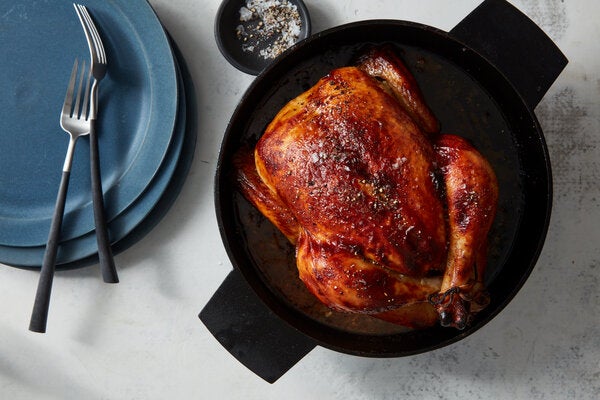
“This recipe, adapted from Samin Nosrat’s “Salt Fat Acid Heat,” is inspired by the Southern grandma method of marinating chicken overnight in buttermilk before frying it. You’re roasting here, but the buttermilk and salt still work like a brine, tenderizing the meat on multiple levels to yield an unbelievably juicy chicken. As an added bonus, the sugars in the buttermilk will caramelize, contributing to an exquisitely browned skin. Be sure to leave 24 hours for marinating the chicken.”

Note: This recipe calls for a whole chicken, however I used parts. They were incredibly delicious, and I rotated the pan only once, from back to front. They were done in about an hour, turning the oven down to 400* after 20 minutes at 425.*

INGREDIENTS

Yield: 4 servings

  • 1 chicken, 3½ to 4 pounds
  • Kosher salt or fine sea salt
  • 2 cups buttermilk
  • PREPARATION
  • Step 1: The day before you want to cook the chicken, remove the wingtips by cutting through the first wing joint with poultry shears or a sharp knife. Reserve for stock. Season chicken generously with salt and let it sit for 30 minutes.
  • Step 2: Stir 2 tablespoons kosher salt or 4 teaspoons fine sea salt into the buttermilk to dissolve. Place the chicken in a gallon-size resealable plastic bag and pour in the buttermilk. (If the chicken won’t fit in a gallon-size bag, double up 2 plastic produce bags to prevent leaks and tie the bag with twine.)
  • Step 3: Seal the bag, squish the buttermilk all around the chicken, place on a rimmed plate, and refrigerate for 12 to 24 hours. If you’re so inclined, you can turn the bag periodically so every part of the chicken gets marinated, but that’s not essential.
  • Step 4: Pull the chicken from the fridge an hour before you plan to cook it. Heat the oven to 425 degrees with a rack set in the center position.
  • Step 5: Remove the chicken from the plastic bag and scrape off as much buttermilk as you can without being obsessive. Tightly tie together the legs with a piece of butcher’s twine. Place the chicken in a 10-inch cast-iron skillet or a shallow roasting pan.
  • Step 6: Slide the pan all the way to the back of the oven on the center rack. Rotate the pan so that the legs are pointing toward the rear left corner and the breast is pointing toward the center of the oven. (The back corners tend to be the hottest spots in the oven, so this orientation protects the breast from overcooking before the legs are done.) Pretty quickly you should hear the chicken sizzling.
  • Step 7: After about 20 minutes, when the chicken starts to brown, reduce the heat to 400 degrees and continue roasting for 10 minutes.
  • Step 8: Move the pan so the legs are facing the rear right corner of the oven. Continue cooking for another 30 minutes or so, until the chicken is brown all over and the juices run clear when you insert a knife down to the bone between the leg and the thigh. If the skin is getting too brown before it is cooked through, use a foil tent. Remove it to a platter and let it rest for 10 minutes before carving and serving.

Key Lime Poundcake

Recipe from Susan Levin Turner

Adapted by Kim Severson

Key Lime Poundcake
Lisa Nicklin for The New York Times

The recipe has been adapted here for a loaf pan, which is a little easier to find and work with. Ms. Turner likes to coat the inside of the greased cake pan with sugar, which helps the cake slide from the pan and offers a little more crispness to the crust. This recipe uses flour instead for tenderness, but the sugar method offers a homey Southern touch. Or use a combination of both. —Kim Severson

Note: From this blog, you must have noticed that I love baking pound cakes. This recipe is exceptional – really delicious! I was not able to find key lime juice but found key limes at Whole Foods. They took awhile to zest and juice, but the effort was so worth it! ( If you don’t get enough zest from the key limes, use the zest from regular limes.) Hint: The glaze makes enough for two cakes. Halve the recipe.

Ingredients for the cake:

  • 1 cup/226 grams unsalted butter at room temperature (2 sticks), cut into pieces, plus more for greasing the pan
  • 2 cups/240 grams all-purpose flour, more for flouring the pan
  • 1½ teaspoons baking powder
  • 4 ounces/113 grams cream cheese at room temperature, cut into pieces
  • 1½ cups/297 grams granulated white sugar
  • 4 eggs at room temperature, lightly beaten
  • 2 tablespoons lime zest
  • 1 tablespoon Key lime juice (I added a little more.)
  • For the glaze:
  • 4 ounces/113 grams cream cheese at room temperature
  • ¼ cup/57 grams unsalted butter at room temperature
  • 2 cups/227 grams confectioners’ sugar
  • ¼ cup/60 milliliters Key lime juice
  • 2 tablespoons lime zest (optional)
  • PREPARATION
  • Step 1: Make the cake: Heat oven to 325 degrees. Generously butter and flour a 9-by-5-inch loaf pan. Sift the flour and baking powder and set aside.
  • Step 2: Mix butter and cream cheese in bowl of a stand mixer, or with a hand mixer on medium speed, until blended; gradually add sugar and beat on medium speed for 5 minutes until light in color and fluffy. Add the beaten eggs about a quarter at a time, fully incorporating before adding the next.
  • Step 3: Add lime zest and mix to incorporate. Add dry ingredients alternately with lime juice, beginning and ending with flour mixture and adding juice in two additions. Mix just enough to incorporate. Pour batter into pan until it is just ¾-inch from the top. (You may have a little batter left over; do not use it or you risk overflow. Make a cupcake!)) Firmly tap the pan on the counter a few times to reduce air pockets.
  • Step 4: Bake for about 1 hour, or until just set in the middle. Check cake after 30 minutes; if top is browning too quickly, tent with foil. If the cake is not set in the middle after an hour, continue baking, checking middle at 5-minute intervals, until set.
  • Step 5: Cool in the pan for 20 minutes; loosen edges and turn out cake onto plate with raised edges to contain the glaze.
  • Step 6: Meanwhile, make the glaze: In a glass bowl, beat the cream cheese and butter until well blended and a little fluffy, about 2 minutes. With the mixer on slow speed, gradually add confectioners’ sugar until fully incorporated, then beat for 20 to 30 seconds.
  • Step 7: Mix in the lime juice, then heat the mixture in a microwave oven for less than a minute, until it is very warm and loose. Using a wooden skewer, poke several holes in the cake. Pour half the glaze over cake, let sit for 10 minutes, pour remaining glaze over cake and sprinkle with lime zest (optional).

Baby Blues Lucheonette and Sazanami Curry Bar

This week I would like to recommend two very different restaurants. The first, a new, modern Greek diner in East Williamsburg, Brooklyn, and the second, a wonderful Japanese restaurant specializing in curry in Fort Lee, New Jersey.

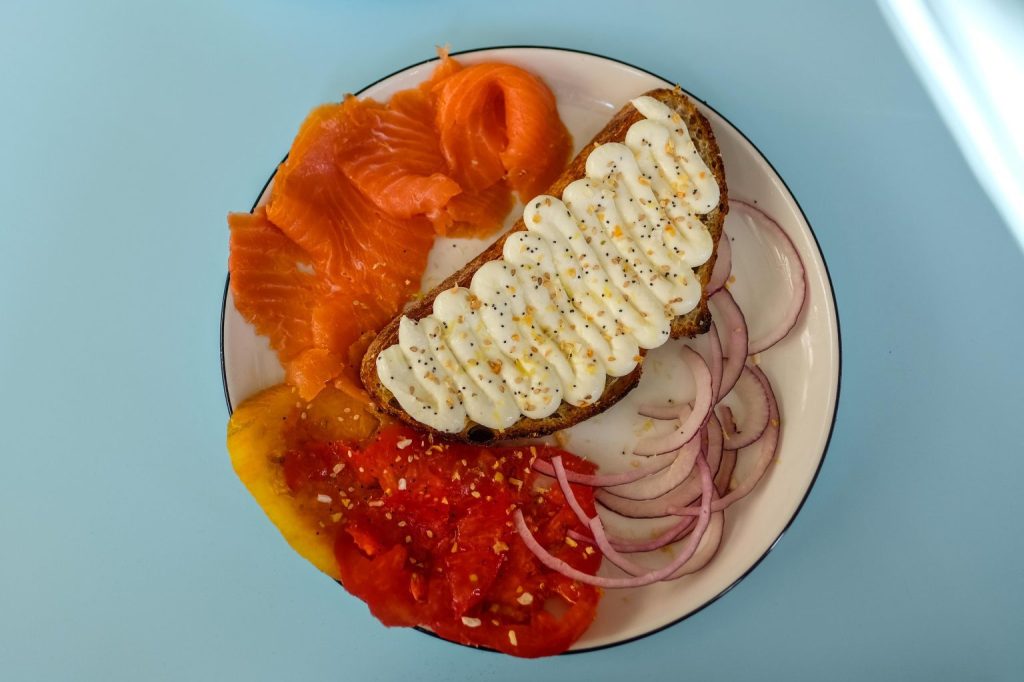
Baby Blues is “a casual (brunch and) lunch spot that serves nourishing food with no frills (ny.eater.com).” One of the menu choices is: “Like a Greek Bagel,” a slice of dense, grainy sourdough bread covered with a salty whipped feta and slices of smoked salmon and heirloom tomato on the side. There are also egg salad, grilled cheese, or bacon-egg-and-cheese sandwiches, three different Greek inspired salads, fruity bowls and toasts, including homemade banana bread covered in cashew ricotta and a crunchy baklava crumble to enjoy with their excellent coffee.

My family and I celebrated Mother’s Day with a brunch at Sazanami Curry Bar. We were very pleasantly surprised. The food was wonderful – from sushi to gyozas to the different kinds of curry (hot or mild). Everything was served with a homemade pickled cabbage, and the best dish, I thought, was pumpkin croquettes, made like the potato croquettes recipe on this blog, but using ground pork instead of beef and Japanese pumpkin. ( Kabocha or Hokkaido?) I’m trying to duplicate the recipe. Will keep you posted.

Chicken Milanese

By Alexa Weibel

Time 40 minutes

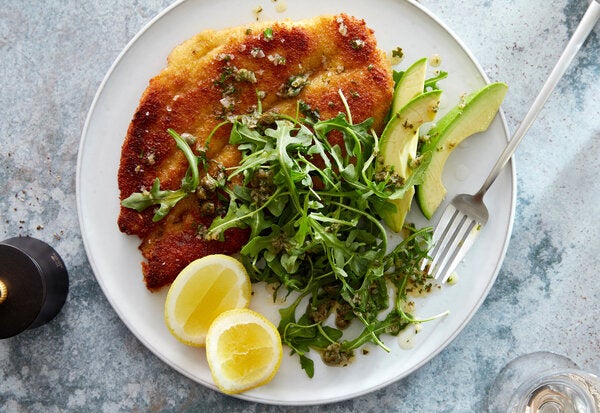
“Chicken Milanese is a simple dish that makes chicken breasts seem positively lavish. Similar to Italian veal Milanese, this classic dish pairs hot and crispy breaded chicken with a cool and lemony salad. The recipe takes a little preparation, but the execution is easy: Pound lean chicken breasts until thin, bread them, then pan-fry until the bread crumbs are golden; the crust ensures that the chicken stays moist. While not traditional, this version adds onion powder, garlic powder and grated Parmesan to the breading.”

INGREDIENTS

Yield: 4 servings

  • 1 teaspoon onion powder
  • 1 teaspoon garlic powder
  • 2 teaspoons Kosher salt (such as Diamond Crystal) and 1 1/2 teaspoons black pepper
  • 2 boneless, skinless chicken breasts (about 10 ounces each)
  • ½ cup all-purpose flour
  • 2 large eggs, beaten
  • 1 ¼ cups panko bread crumbs
  • ½ cup finely grated Parmesan
  • About 1 cup olive oil (or neutral oil), for pan-frying
  • For the Salad:
  • ½ cup shaved Parmesan
  • 3 tablespoons olive oil
  • 1 tablespoon fresh lemon juice, plus lemon wedges for serving
  • 5 ounces arugula (about 5 packed cups)
  • 1 cup cherry tomatoes (optional), halved
  • PREPARATION
  • Step 1: Prepare the chicken: In a small bowl, stir together the onion powder, garlic powder, 2 teaspoons salt and 1 ½ teaspoons pepper.
  • Step 2: Set each chicken breast on a cutting board. Set one palm on top of one breast to hold it still then use a chef’s knife with the other hand to slice the breast in half horizontally. Repeat with the second chicken breast, then, using a meat mallet or the bottom of a heavy skillet, pound each piece until no more than ⅓-inch thick. Season generously on both sides with half the seasoned salt.
  • Step 3: Set the flour and eggs into two separate shallow bowls. To a third, add the panko, finely grated Parmesan and the remaining seasoned salt and stir to combine. Dip one piece of chicken into the flour to coat all over, then transfer to the eggs and turn to coat. Add to the panko mixture and turn, pressing panko into it until fully coated. Transfer to a baking sheet and repeat with the remaining chicken. (The breaded chicken will hold in the refrigerator for a few hours.)
  • Step 4: In a medium nonstick skillet, heat a ½-inch layer of oil over medium-high. Working in two batches, add the breaded chicken and cook, undisturbed, until golden on both sides, about 3 minutes per side. (You could also cook them all at once in a large skillet, though you’ll need twice the amount of oil to do so.) Transfer to a wire rack and lightly sprinkle with additional salt, if desired.
  • Step 5: While the chicken cooks, prepare the salad: In a large bowl, whisk to combine the olive oil and lemon juice; season to taste with salt and pepper. Add the arugula, cherry tomatoes (if using) and shaved Parmesan; toss to coat then season to taste again with salt and pepper.
  • Step 6: Divide the chicken among plates and pile the salad on the side. Serve immediately, with lemon wedges for squeezing on top.

Fish Milanese

By Kay Chun

“This fast weeknight dinner features quick-cooking flounder prepared alla Milanese, the style of breading and frying meat cutlets. The fillets are lightly breaded and pan-fried until golden and crisp on the outside and tender in the middle. A lemony, brown-butter pan sauce with capers comes together quickly to add a tangy brininess to the dish. Any leftover fish makes for terrific sandwiches the next day, stacked with lettuce, tomato, pickles and mayo.”

Note: My only suggestion would be to double the recipe for the sauce. If you prefer to use less butter, substitute olive oil instead.

INGREDIENTS

Yield: 4 servings

  • ¼ cup all-purpose flour
  • 2 large eggs, beaten
  • 1 cup plain bread crumbs
  • Salt and black pepper
  • ½ teaspoon dried oregano
  • 4( 5- to 6-ounce) flounder fillets (or other thin white fish fillets)
  • 6 tablespoons unsalted butter
  • 5 tablespoons neutral oil, such as safflower or canola
  • 2 tablespoons minced shallot
  • ¼ teaspoon minced garlic
  • 2 tablespoons lemon juice, plus lemon wedges for serving
  • 2 tablespoons chopped fresh parsley
  • 1 tablespoon capers, plus 1 tablespoon caper brine
  • PREPARATION
  • Step 1: Place flour, eggs and bread crumbs in three separate shallow bowls, and season each with salt and pepper. Crumble the oregano with your fingertips and add to the bread crumbs; mix well.
  • Step 2: Season fish with salt. Working with one piece at a time, dredge in flour (shake off excess), dip in egg (shake off excess) then dredge in bread crumbs, pressing to adhere. Transfer to a large plate.
  • Step 3: In a 12-inch nonstick skillet, melt 1 tablespoon of the butter in 1 tablespoon of the oil over medium heat. Add 2 fillets and cook until golden underneath, about 3 minutes. Flip fish and cook until golden on the second side and cooked through, 2 minutes longer. Transfer to a large paper towel-lined plate, and season with salt. Wipe out skillet. Repeat with 1 tablespoon of the butter, 1 tablespoon of the oil and the remaining fish.
  • Step 4: Wipe out skillet and melt the remaining 4 tablespoons butter over medium-low heat. Add shallot and cook, stirring occasionally, until shallot is softened and butter is golden brown, about 2 minutes. Stir in the garlic until fragrant, 30 seconds. Add the remaining 3 tablespoons oil, plus the lemon juice, parsley, capers and caper brine, and mix well. Transfer the brown-butter vinaigrette to a small heatproof bowl, and season with salt and pepper.
  • Step 5: Divide the fish among the plates and drizzle with the brown-butter vinaigrette. Serve with lemon wedges.

Oven Bacon, updated

By Ali Slagle

Time: 20 minutes

I tried this recipe and was happy with the results.(Used aluminum foil – lined baking sheets!)

“Cooking bacon in the oven gives you perfectly crispy slices without any flipping or fussing, and the cleanup is super speedy. It’s also the best way to make bacon for a crowd. You can cook the bacon directly on aluminum foil-lined baking sheets or on a wire rack set on top of the baking sheets. The latter method will give you extra crispy bacon, but you’ll have to wash that greasy rack. Your choice!”

INGREDIENTS

Yield: 4 to 8 servings

  • 1 pound bacon

PREPARATION

  1. Heat the oven to 450 degrees. Arrange the bacon in a single layer on 2 aluminum foil-lined rimmed baking sheets, or, for extra crispy bacon, arrange on 2 wire racks set over 2 foil-lined rimmed baking sheets.
  2. Bake until the bacon is browned and starts to ripple, or to desired doneness, 10 to 20 minutes. (Because the cook time depends on the thickness of the bacon and how you like it cooked, start checking doneness at the 10-minute mark.)
  3. Transfer the bacon to a paper towel-lined plate to drain.

If You’re Cooking Bacon, a Few Chef-Approved Tips

So you’ve brought home the bacon — what now? You’ve got two main choices: Opt for pan-frying or cook in the oven. As for the chefs, the oven is, overwhelmingly, the way to go. “Stop cooking your bacon in a frying pan — this is Sisyphus’s work!” pleads Chef Morgan Jarrett of STATE Grill and Bar, the flagship restaurant of the Empire State Building. “Instead, take a small sheet tray and line it with parchment paper. Lay the bacon in a single layer, and cook it at 350ºF.” After about six to eight minutes, much like you’d do while tanning on a hot beach, give that bacon a flip.

Coq Au Vin

Coq Au Vin, or chicken in wine, is a popular classic French dish made easy in one pan! With crispy chicken drumsticks, chicken thighs and bacon, this Coq au vin gets everybody talking! Serve with creamy mashed potato or cauliflower smothered with butter( or plain rice), and the most delicious chicken dinner is ready on the table!

Ingredients

  • 2 tablespoons olive oil
  • 4 ounces (120g) diced bacon
  • 8 chicken pieces (4 drumsticks and 4 thighs), skin on, bone in
  • 2 teaspoons salt (plus more to season)
  • 1/2-1 teaspoon freshly ground black pepper (plus more to season)
  • 1 onion, diced
  • 8 oz (250g) carrots cut into 1-inch pieces
  • 4 cloves garlic, minced
  • 1/4 cup brandy (OPTIONAL) (I used 1/8 cup.)
  • 350 ml  (1+1/2 cups) good quality red wine (Burgundy, Pinot Noir, Shiraz) (I used 1 cup.)
  • 1 1/4 cups low sodium chicken stock or broth
  • 5 sprigs thyme
  • 3 tablespoons unsalted butter at room temperature, divided
  • 1 1/2 tablespoons all-purpose flour
  • 8 ounces (250g) frozen small whole onions (pearl onions, if you can find them.))
  • 8 ounces (250g) cremini (brown) mushrooms thickly sliced
  • 2 tablespoons fresh chopped parsley, to garnish (optional)

Instructions

  • Preheat the oven to 350°F | 175°C.
  • Heat the olive oil over medium heat in a large pot or Dutch oven. Add the bacon and cook until crispy (about 8 to 10 minutes). Transfer bacon to a plate with a slotted spoon.
  • Pat chicken pieces dry with paper towel and season with salt and pepper. (Don’t skip this step, otherwise oil will splatter!)
  • Add the chicken pieces in batches of two to the leftover bacon grease (skin side down for chicken thighs). Sear for about 5 minutes each side, until skin is rendered, crispy and browned. Transfer chicken to the plate with the bacon. Set aside.
  • Add the onions, carrots, salt, and pepper to the pan and cook over medium heat for 5 minutes, while stirring occasionally, until the onions are transparent and lightly browned. Add the garlic and cook until fragrant (about 1 minute). 
  • Pour in the Cognac/brandy, wine and chicken stock; stir to combine. Add the thyme, bacon, chicken, and any juices leftover from the plate into the pot. Bring to a simmer, then cover with a lid or foil and transfer to the oven for 20-30, or until the chicken is cooked through and no longer pink in the middle. (This step may take longer.)
  • While chicken is in the oven, melt 2 tablespoons of butter in a pan over medium heat. Cook the mushrooms for 8 to 10 minutes, until soft and browned. Set aside.
  • Remove casserole from oven and place on stove. Mash the remaining butter with the flour and stir into the casserole (the heat will cook any lumps out). Add the pearl onions, mushrooms; bring the casserole to a simmer and cook for a further 10 minutes, until sauce has thickened. Season to taste, if desired. Garnish with parsley and any extra thyme leaves, and serve immediately over mashed potatoes. (This recipe took more seasoning than usual. I added quite a bit of salt to taste.)
  • Adapted from Ina Garten
  • OPTIONAL: BROIL AT THE END OF COOKING TO GET A NICE, GOLDEN SKIN ON THE CHICKEN.