Waffles

This is another really good recipe from Melissa Clark.

It’s time to put that waffle iron languishing in the back of your cabinet to good use. These airy, delicate and crisp-edged waffles are so fabulous, yet so simple to throw together, they’re destined to become part of your weekend breakfast routine. Freeze leftovers, if you have any, in Ziplock bags and serve them during the week. You can pop them in the toaster to reheat (use a light setting) and they come out nearly as well as freshly made, maybe even slightly crunchier. 

For a lighter, fluffier waffle, separate the eggs and proceed with step 2 using the egg yolks. Beat the whites until stiff, then fold into the batter. For whole-grain waffles, use 1⅓ cup all-purpose flour and ⅔ cup whole-wheat flour. You can also substitute brown sugar for the granulated.

INGREDIENTS

Yield: about 10 waffles

  • 6 tablespoons unsalted butter, more for waffle iron
  • 2 cups/240 grams all-purpose flour
  • 1 tablespoon/15 grams sugar
  • 1 teaspoon/8 grams baking powder
  • 1 teaspoon/5 grams fine sea salt
  • ½ teaspoon/3 grams baking soda
  • 1 cup plain yogurt (or see Tip)
  • 1 cup milk
  • 4 large eggs

PREPARATION

  1. Melt butter either on the stove or in the microwave. Set aside.
  2. In a large bowl, whisk together flour, sugar, baking powder, salt, and baking soda. In a separate bowl, whisk together yogurt, milk, melted butter, and eggs. Fold wet ingredients into dry ingredients.
  3. Preheat a waffle iron and, using a pastry brush or paper towel, lightly coat with butter. Cook waffles (using about ½ cup batter per waffle) until golden and crisp. Butter the iron in between batches as needed. Serve waffles immediately as they are ready, or keep them warm in a 200 degree oven until ready to serve.

Tip

  • If you don’t have yogurt ( sour cream or buttermilk will all work), substitute another 1 cup of milk mixed with 1 tablespoon lemon juice or vinegar.

Roast Tarragon-Cognac Chicken

Recipe from Christiane Baumgartner
Adapted by Melissa Clark

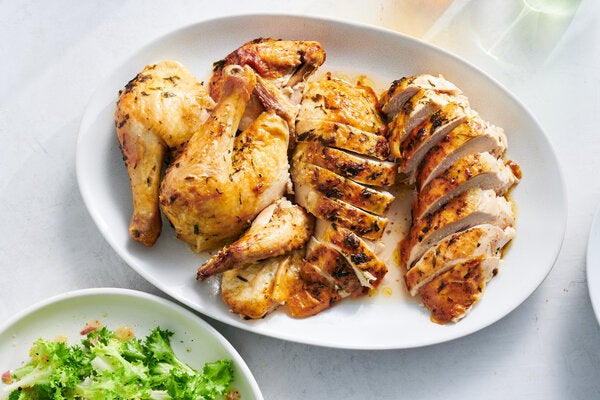
The sophisticated, French flavors of brandy, butter and tarragon season this golden-skinned roast chicken, adding panache to what is otherwise an easy and straightforward recipe, adapted from Christiane Baumgartner via her daughter, Florence Chapgier, a reader. Serve it with mashed potatoes or polenta, a soft bed to absorb all the heady, buttery juices. And if you’re not a tarragon fan, fresh thyme makes an excellent, milder substitute. —Melissa Clark

*****IMPORTANT NOTE: READ STEP FIVE BEFORE YOU MAKE THIS EXCELLENT RECIPE. Also, the oven will get a little messy. The pan juices do splatter.

INGREDIENTS

Yield: 4 servings

  • 1 (4-pound) whole chicken
  • 2 teaspoons coarse gray sea salt or 2½ teaspoons kosher salt (such as Diamond Crystal)
  • 6 tablespoons unsalted butter, softened
  • 1 bunch fresh tarragon, leaves and tender stems coarsely chopped (about ¾ cup)
  • 2 tablespoons Cognac
  • 1 teaspoon freshly ground black pepper
  • PREPARATION
  • Step 1: Pat the chicken dry and salt the bird inside and out. Transfer to a plate or baking dish, preferably on a rack, and refrigerate uncovered for at least 1 hour or overnight.
  • Step 2: When ready to cook the chicken, heat the oven to 400 degrees.
  • Step 3: In a small bowl, combine butter, tarragon, 1 tablespoon Cognac and the pepper. Rub mixture inside the chicken cavity and over and under the chicken skin.
  • Step 4: Place chicken on a rimmed sheet pan or in a large, ovenproof skillet. Roast, breast side up, until the skin is golden and crisp, and the juices run clear when you insert a fork in the thickest part of the thigh (165 degrees), about 1 hour. (I roasted the chicken about 10 minutes longer.)
  • Step 5: Turn off the oven — don’t skip this step, or the Cognac may overheat and catch fire — and transfer the pan with the chicken to the stovetop. Pour the remaining 1 tablespoon Cognac over the bird and baste with some of the buttery pan juices. Immediately return the chicken to the turned-off oven and let rest there for 10 minutes before carving and serving.

Pan-Seared Gyoza

Recipe from Ivan Orkin and Chris Ying
Adapted by Kiera Wright-Ruiz

“Gyoza are plump, Japanese dumplings typically filled with a mixture of ground pork, cabbage, chives, ginger and garlic. They originated as a spin-off of Chinese jiaozi, but they differ in many ways, particularly in how they are wrapped: Gyoza have very thin wrappers sealed with signature pleats, while Chinese jiaozi have thick wrappers that vary in how they are sealed.” This is a wonderful recipe. If you’ve never made them before, do watch those gyoza folding videos online as the NYT suggests.

INGREDIENTS

Yield: 60 gyoza (4 to 6 servings)

  • ½ cup soy sauce
  • 2 tablespoons plus 2 teaspoons rice vinegar
  • 1 to 2 teaspoons Japanese chile oil (rayu) or Chinese chile oil (optional), or to taste
  • 1 pound green cabbage (about ½ medium head)
  • 4 teaspoons kosher salt
  • ¾ pound ground pork
  • 1 tablespoon plus 1 teaspoon minced ginger
  • 1 tablespoon plus 1 teaspoon minced garlic
  • 1 cup chopped garlic chives (nira) or regular chives
  • 1 tablespoon soy sauce
  • 1 tablespoon toasted sesame oil
  • Cornstarch or potato starch, for sprinkling
  • 60 gyoza wrappers (about 12 ounces)
  • Neutral oil (such as vegetable or canola oil), for frying
  • PREPARATION
  • Step 1: Prepare the gyoza dipping sauce: In a small bowl, whisk together the soy sauce and rice vinegar, plus chile oil, if using. Set aside (makes a generous ½ cup).
  • Step 2: Finely chop the cabbage or process it in a food processor into confetti-size bits, then transfer it to a sieve set over a large bowl. Toss with 2 teaspoons of the salt and let sit for 20 minutes in the sink. Gently press the cabbage to squeeze out as much water as you can.
  • Step 3: Combine the drained cabbage, pork, ginger, garlic, chives, soy sauce, sesame oil and the remaining 2 teaspoons salt in a large bowl and mix thoroughly just until everything is evenly distributed. (Don’t overdo it: Too much handling and the fat in the pork will begin to melt.)
  • Step 4: Here’s where you want to employ some extra hands to help you: Fill a small bowl with water. Sprinkle a rimmed sheet pan or two with cornstarch or potato starch to prevent the finished gyoza from sticking (or just use parchment paper). For each gyoza, place a wrapper in the palm of your hand and spoon about 1½ teaspoons of the filling into the center. Use the back of the spoon to smoosh it lightly (it should fill about half the wrapper). You don’t want the filling to run to the edges, but you also don’t want it sitting in a fat clump in the middle. Dip your finger into the water and run it along the perimeter of one half of the wrapper. Now fold the wet edge of the wrapper over to meet the dry edge. Crimp the edges together at one corner, then proceed around the dumpling, using your finger to push the dough into little pleats on one side and pressing them against the other side to seal it. (If you need more guidance, there are hundreds of gyoza-folding videos online.) Place the gyoza on the sheet pan as you finish them.
  • Step 5: To pan-fry the gyoza, you will need a lidded 10-inch nonstick pan or a well-seasoned carbon steel pan. (You could also use whatever skillet you have, but increase the oil and keep a close eye on the gyoza.) Heat 1 tablespoon neutral oil in the pan over medium heat. When hot, add 10 to 15 gyoza, flat-side down, and cook until browned on the bottoms, 2 to 3 minutes. Add enough water to come just under a quarter of the way up the gyoza (about ½ cup, depending on how many gyoza you have in the pan), cover, and let the water cook away until the pan is dry and the gyoza wrappers have softened completely, 3 to 4 minutes. Remove the lid, increase the heat to medium-high, and let the gyoza crisp up on the bottoms for another minute or two, depending on how crisp you like them. Serve immediately with the dipping sauce and additional chile oil. Wipe the pan clean and cook the remaining gyoza. (Alternately, uncooked gyoza can be frozen on a baking sheet in a single layer until firm and then stored in resealable plastic bags for a couple months. To cook frozen gyoza, add a second batch of water in step 4 after the first batch evaporates.)

Off-Oven Roast Beef

By Sam Sifton

I made this with a 3 pound bottom roast beef and cooked it for 20 minutes at 500.* For my family, it was a little rare, so when I try this again, I’ll roast it for 25 minutes before turning the oven off and letting it sit for 2 hours. The roast was AMAZING! Taste was perfect!

INGREDIENTS

Yield: 4 to 6 main courses, with leftovers for sandwiches

  • 1 beef roast, like top, eye or bottom round, approximately 3 pounds
  • 1 tablespoon kosher salt
  • 1 tablespoon freshly ground black pepper
  • 3 cloves garlic, peeled and minced
  • 1 tablespoon olive oil
  • Red-pepper flakes to taste (optional)
  • PREPARATION
  • Remove roast from refrigerator. Preheat oven to 500 degrees.
  • In a small bowl, mix together salt, pepper, garlic, olive oil and red-pepper flakes to create a kind of paste. Rub this all over the roast. Place beef in a roasting pan or cast-iron skillet, fat-side up, and put in oven. Cook undisturbed for 5 minutes per pound.
  • Turn off oven. Do not open oven door. Leave roast to continue cooking, undisturbed, for two hours.
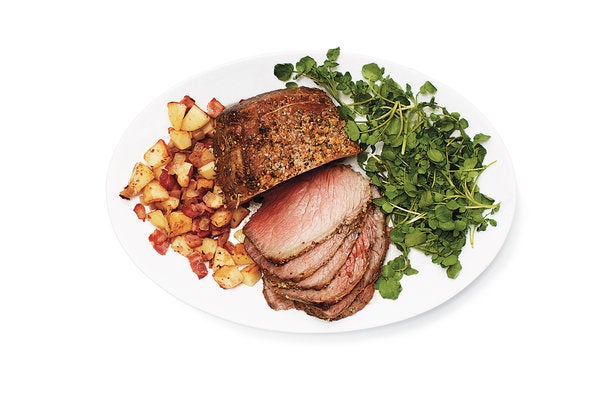
  • After two hours, remove roast from oven. Slice and serve alongside, ideally, a watercress salad and some skillet-fried potatoes.

Beer Batter Fried Fish

For this recipe, you will need to trust your taste buds.

For the fish:

1 pound of flounder fillets, sole, cod, or any other fish you wish to fry.

Salted water with fresh, squeezed, lemon juice – enough to cover the fish

For the batter:

1 cup all purpose flour

1 beaten egg (optional) Coating is crispier without the egg.

A can of beer

cooking oil (I prefer peanut oil for this.)

Preparation:. Here’s where you taste the water. It should be slightly salty and lemony. Soak the fish fillets in this water for about 20 – 30 minutes.

Pour enough oil into a frying pan so that the fish does not stick to the bottom of the pan. Heat on a medium flame.

For the batter, stir the beaten egg into the flour. Now slowly pour in the beer until you have a pancake-like consistency. It shouldn’t be too thick or thin. Drain the fillets and dip them, one at a time, into the batter and let the excess drip off.

Fry the fish in the hot oil until it is nicely browned. Turn, and brown on second side. Carefully lift out the fillet and place it on a piece of paper towel.

Serve with homemade tartar sauce. I just put equal amounts of mayonnaise and pickle relish in a bowl and mix (or the amounts to your taste).

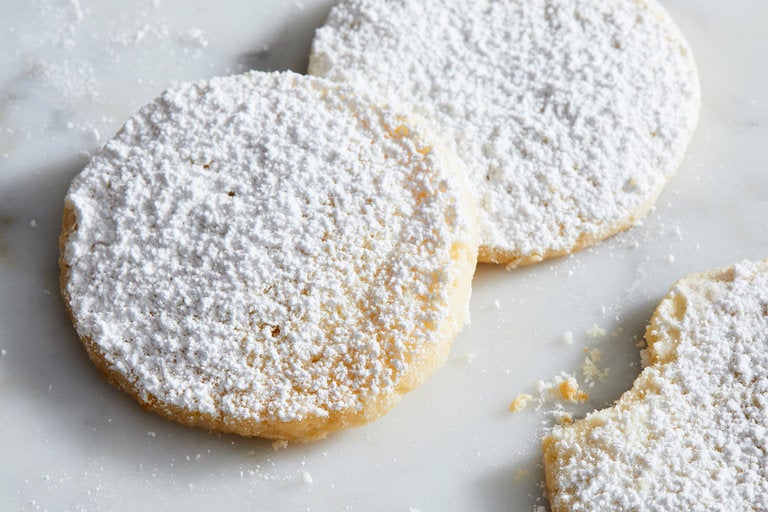
Lemon Meltaways

By Yossy Arefi

“These tender cookies are an elegant teatime snack, packed with bright lemon flavor. Bake them all at once or save half of the dough, well wrapped, in the freezer for later. If you’ve frozen the dough, let it warm slightly before slicing to prevent cracked cookies.”

I just made these and ate several while they were still warm. Didn’t add the powered sugar. This is another easy, delicious, lemon recipe.

INGREDIENTS

Yield: About 40 cookies

  • 1 cup/227 grams unsalted butter, softened
  • 2 cups/246 grams confectioners’ sugar
  • 1 tablespoon packed finely grated lemon zest
  • 2 tablespoons fresh lemon juice
  • 1 egg yolk
  • 2 cups/255 grams all-purpose flour
  • ¼ cup/32 grams cornstarch
  • ½ teaspoon kosher salt

PREPARATION

  1. Add butter, 1¼ cups/154 grams confectioners’ sugar, and lemon zest to the bowl of a stand mixer fitted with the paddle attachment. Mix on low speed until the sugar is moistened, then turn the mixer to medium-high and beat until light and fluffy, about 3 minutes. Scrape down the sides of the bowl, and add the lemon juice and egg yolk. Mix to combine.
  2. Reduce the speed to low, add the flour, cornstarch and salt, and mix until just combined.
  3. Divide the dough into 2 pieces and set each piece on a length of parchment paper or plastic wrap. Fold the paper over the sticky dough, and use your hands to form it into a cylinder about 1½ inches wide. Roll the cylinder a few times to help shape it, but don’t worry if it isn’t perfect. Chill the dough until completely firm, at least 2 hours.
  4. When you are ready to bake, heat oven to 350 degrees, and line two baking sheets with parchment paper.
  5. Slice the dough into rounds just under ¼-inch thick and arrange them at least 1-inch apart on the prepared baking sheets. Bake the cookies for 12 to 17 minutes, rotating the pans from top to bottom and front to back halfway though. The cookies should be golden around the edges, but not brown all of the way through.
  6. Set the pans on cooling racks and cool for a few minutes. Dust both sides of the warm cookies with the remaining ¾ cup/92 grams confectioners’ sugar. Let the cookies cool completely, then store at room temperature in an airtight container. Dust with additional confectioners’ sugar just before serving, if desired.

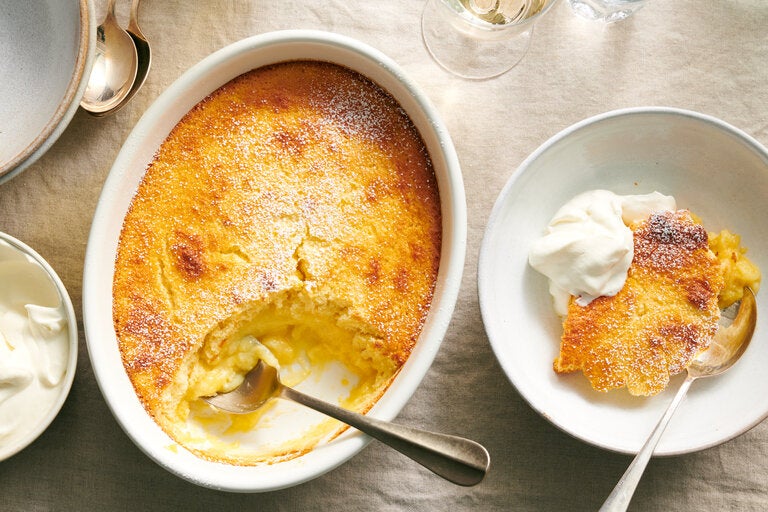
Baked Lemon Pudding

Recipe from JR Ryall
Adapted by David Tanis

This hot lemon pudding is not a soufflé, but it has a light, airy feel. And, as it bakes, it separates into distinct layers, custardy on the bottom and spongy on top. —David Tanis. This amazing and easy to make dessert tastes exactly like lemon. meringue pie!

INGREDIENTS

Yield: 4 to 6 servings

  • 1 tablespoon/15 grams unsalted butter, softened
  • 1 cup plus 2 tablespoons/225 grams granulated sugar
  • 3 large eggs, yolks and whites separated. (room temperature)
  • 3 tablespoons/30 grams all-purpose flour
  • 2 large lemons, grated and juiced (about 2 tablespoons zest and 6 tablespoons juice)
  • 1 cup/250 milliliters whole milk
  • Confectioners’ sugar, for dusting
  • Softly whipped cream, for serving
  • PREPARATION
  • Heat oven to 350 degrees and set a rack in the middle of the oven.
  • Place butter in a medium mixing bowl. Gradually add sugar as you mash the mixture with a wooden spoon until it looks like damp sand.
  • Mix egg yolks into sugar mixture, then beat in the flour. Add lemon zest and juice, then whisk in the milk.
  • In a separate clean large bowl, beat egg whites to stiff peaks. Fold whites by hand gently into batter.
  • Pour mixture into a 5-cup ceramic or glass baking dish (or Pyrex pie plate). Bake in the middle of the oven for about 40 minutes, or until mixture is just set and top is golden brown. (Alternatively, bake in individual ramekins or custard cups for about 20 minutes.)
  • Serve warm, dusted with confectioners’ sugar, with softly whipped cream alongside. (Might not need confectioners sugar. Sweet enough!)

Orange Walnut Cake

By Florence Fabricant

This is a wonderful recipe. The cake is very moist and has a lovely orange taste. Don’t be afraid to use the liquor. The alcohol evaporates and leaves a delicious glaze.

Yield: 1 large cake, serving 12

INGREDIENTS

  • 2 cups flour
  • 1 teaspoon baking powder
  • ½ teaspoon baking soda
  • Pinch of salt
  • ½ pound butter, softened
  • 1½ cups sugar
  • 3 eggs
  • 1¼ cups fresh orange juice
  • 1 cup finely chopped walnuts
  • 2 tablespoons grated orange rind
  • 2 tablespoons Cointreau, Triple Sec or Grand Marnier
  • PREPARATION
  • Preheat oven to 350 degrees. Butter and flour a nine-inch springform baking pan.
  • Sift flour, baking powder, baking soda and salt together and set aside. Beat the butter and one-and-a-third cups of the sugar together until light, then beat in the eggs. Add the flour alternately with one cup of the orange juice. Fold in the walnuts and orange rind.
  • Spread batter in prepared pan and bake about 1 hour and 10 minutes, until browned and a cake tester comes out clean.
  • Shortly before the cake is finished baking, simmer the remaining one-fourth cup of orange juice with the remaining sugar and the liqueur until the mixture is reduced to about three tablespoons and is syrupy.
  • As soon as the cake is done, poke it about a dozen times with a skewer, then brush the warm glaze over it. Allow to cool completely before removing from the pan.

Marcella Hazan’s Bolognese Sauce

Recipe from Marcella Hazan Adapted by The New York Times

This is a really delicious recipe. I used 1/2 cup of wine instead of a full cup, but that’s up to you, and also a combination of beef and pork.

INGREDIENTS

Yield: 2 heaping cups, for about 6 servings and 1½ pounds pasta

  • 1 tablespoon vegetable oil
  • 3 tablespoons butter plus 1 tablespoon for tossing the pasta
  • ½ cup chopped onion
  • ⅔ cup chopped celery
  • ⅔ cup chopped carrot
  • ¾ pound ground beef chuck (or you can use 1 part pork to 2 parts beef)
  • Salt
  • Black pepper, ground fresh from the mill
  • 1 cup whole milk
  • Whole nutmeg
  • 1 cup dry white wine
  • 1½ cups canned imported Italian plum tomatoes, cut up, with their juice
  • 1¼ to 1½ pounds pasta
  • Freshly grated parmigiano-reggiano cheese at the tab

PREPARATION

  1. Put the oil, butter and chopped onion in the pot and turn the heat on to medium. Cook and stir the onion until it has become translucent, then add the chopped celery and carrot. Cook for about 2 minutes, stirring vegetables to coat them well.
  2. Add ground beef, a large pinch of salt and a few grindings of pepper. Crumble the meat with a fork, stir well and cook until the beef has lost its raw, red color.
  3. Add milk and let it simmer gently, stirring frequently, until it has bubbled away completely. Add a tiny grating — about ⅛ teaspoon — of nutmeg, and stir ( didn’t use this).
  4. Add the wine, let it simmer until it has evaporated, then add the tomatoes and stir thoroughly to coat all ingredients well. When the tomatoes begin to bubble, turn the heat down so that the sauce cooks at the laziest of simmers, with just an intermittent bubble breaking through to the surface. Cook, uncovered, for 3 hours or more, stirring from time to time. While the sauce is cooking, you are likely to find that it begins to dry out and the fat separates from the meat. To keep it from sticking, add ½ cup of water whenever necessary. At the end, however, no water at all must be left and the fat must separate from the sauce. Taste and correct for salt.
  5. Toss with cooked drained pasta, adding the tablespoon of butter, and serve with freshly grated Parmesan on the side.

K’FAR, Diner, and for my grandson, Farm House Cafe

My family and I visited these restaurants recently, and to the first two, we returned a second time.

The Farmhouse Cafe, a farm to table eatery, is located in Cresskill, NJ. Its a charming wooden structure reminiscent of earlier days and features an all day menu “specializing in home style comfort food, hearty and healthy salads, burgers, sandwiches, soups and stews.” Seven of us went for brunch, and it didn’t disappoint. My grandson was very pleased with the choices on the kids menu and asked me to write about it. So for you, K 🙂

K FAR, “village” in Hebrew, is a bakery and cafe located in the Hoxton hotel in Williamsburg, Brooklyn, just downstairs from their hit restaurant, Laser Wolf. Here, its all about reservations, but we didn’t have one the two times we went. We arrived at 11:00 for brunch and took our chances. The food is excellent – Borekas, flaky and stuffed Israeli pastry, a variety of Jerusalem Bagel sandwiches, Kubaneh Toasts (Enriched Yemenite Sabbath Bread), Salads, & Bowls and Pastries. The soft scrambled eggs were delicious as well as the YEMENITE LATTE (Cardamom, Ginger, Cinnamon). If you can’t get a table, you can order from their full menu and sit in the cafe.

And lastly, DINER, located on the corner of Berry Street and Broadway, Brooklyn, is in a 90 year old Pullman dining car and is committed to serving local, seasonal. and sustainable food. The specials change daily, and for brunch, we have tried their egg sandwich (amazing), biscuits and gravy, a fried fish sandwich, and a pork shoulder sandwich – all wonderful. Their french toast on brioche looks great (next time)!

PS: For those of you who live in NJ, I’d like to recommend Tenafly’s Europe Cafe and Grill. I’ve had lunch there twice and was pleased with their “authentic Turkish cuisine.” Their chicken and lamb “shish” (tender char-grilled cubes of chicken or lamb), served with rice and stewed vegetables, was really good. Their menu features vegetarian selections also.